

Integrating AI into Scrum Frameworks
Integrating AI into Scrum Frameworks
Integrating AI into Scrum Frameworks
Why AI Matters in Scrum for Finance
Imagine a financial institution striving to stay competitive by automating its mortgage approval process. The need for quick, accurate decisions is crucial. Here, integrating AI into Scrum can enhance efficiency, reduce manual errors, and streamline workflows. In the fast-paced world of finance, AI's real-time insights and automation capabilities are game-changers, making this integration vital.
Understanding AI and Scrum Basics
AI in Finance: AI refers to the use of machines to mimic human intelligence tasks, such as data analysis or decision-making. In finance, AI can automate repetitive tasks and provide predictive insights.
Scrum Framework: Scrum is a popular Agile methodology focused on iterative development, embracing change, and delivering value quickly. It revolves around roles (e.g., Scrum Master, Product Owner), events (e.g., Sprints, Daily Stand-ups), and artifacts (e.g., Product Backlog).
Integrating AI with Scrum: A Step-by-Step Approach
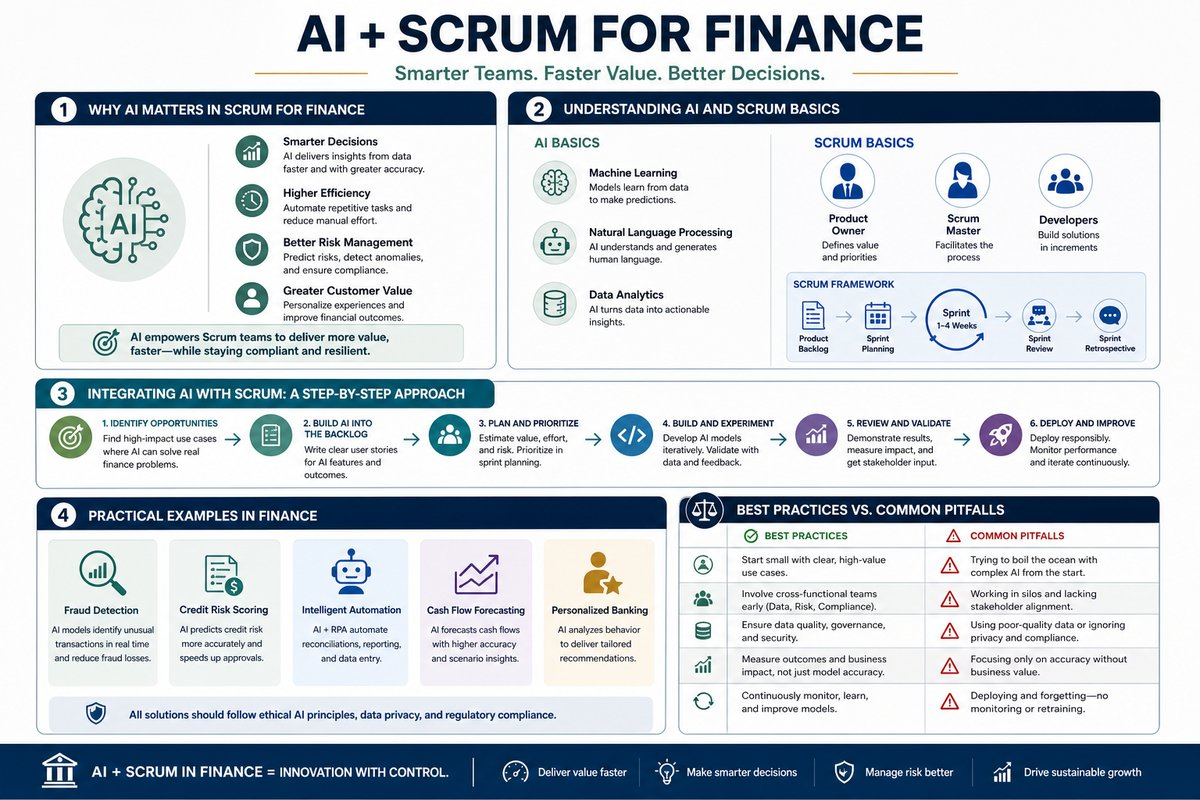
- Identify the Right Use Cases:
Begin by pinpointing areas where AI can add value, such as fraud detection or risk assessment. - Adopt Agile Principles:
Embrace flexibility and continuous improvement. AI models can evolve with feedback loops and regular iterations. - Ensure Data Accessibility:
AI thrives on data. Ensure data is accessible, clean, and relevant within the Scrum team's workflow. - Collaborate Effectively:
Collaboration between AI specialists and financial experts is key. Cross-disciplinary teams can align objectives and expectations.
Table: AI-Scrum Integration Best Practices and Pitfalls
| Aspect | Best Practices | Common Pitfalls |
|---|---|---|
| Use Cases | Focus on high-impact areas | Overloading with unnecessary AI features |
| Agile Adoption | Use iterative feedback loops | Ignoring feedback and sticking to rigid plans |
| Data Management | Maintain a clear data strategy | Poor data quality and lack of access |
| Team Collaboration | Encourage multidisciplinary collaboration | Siloed teams that lead to misalignment |
Practical Examples in Finance
Example 1: Automating Loan Approvals
A financial institution integrated AI into their Scrum process to automate loan approvals. By leveraging machine learning algorithms, they reduced approval times from days to hours. During each Sprint, the Scrum team, including AI specialists and financial analysts, focused on refining the algorithm based on customer feedback and data analysis.
Example 2: AI in Risk Management
Another example involves a bank using AI to enhance its risk management system. The Scrum team collaboratively built an AI model to predict loan defaults. Through iterative Scrum sessions, the team could adapt the model based on real-time data, reducing risks significantly and enhancing decision-making accuracy.
Closing Thoughts and Next Steps
Integrating AI into Scrum frameworks offers significant benefits, especially in the fast-paced finance sector. It enhances decision-making, automates processes, and yields better customer satisfaction. By adhering to best practices and learning from potential pitfalls, teams can maximize AI's potential.
Next, we'll build on this by exploring Future Learning Paths in AI and Agile.