

Aligning Scrum with AI in Finance
Aligning Scrum with AI in Finance
Using AI to Enhance Scrum in Finance
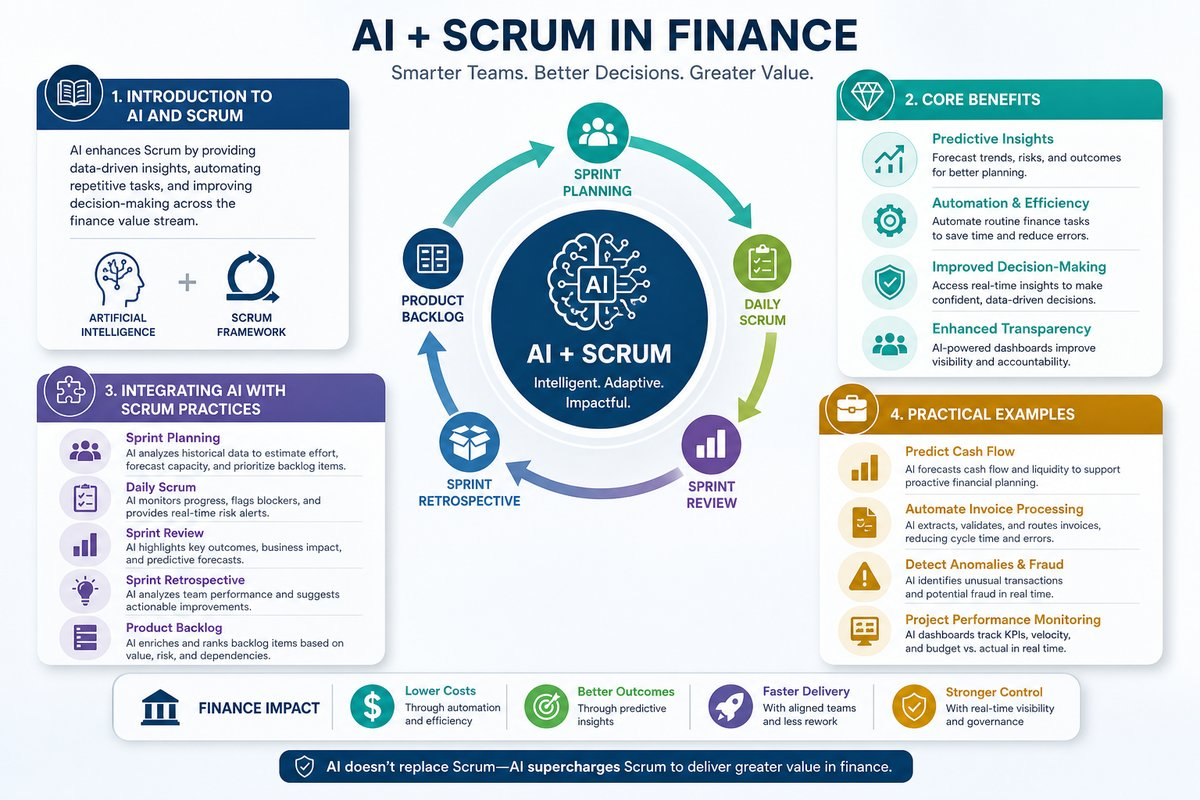
Integrating Artificial Intelligence (AI) into Scrum can transform the way financial institutions manage projects. With the fast-paced evolution of financial markets, the ability to rapidly adapt and improve through technology is crucial. This lesson will delve into how AI can be aligned with Scrum practices to maximize efficiency and outcomes in finance projects.
Introducing AI to Scrum in Finance
Imagine a financial institution trying to keep up with the ever-changing market demands while streamlining their project management processes. AI can offer predictive insights and automation that enhance the agility Scrum provides, enabling teams to make informed decisions swiftly. It's essential for finance professionals to understand how integrating AI with Scrum can lead to more effective project outcomes.
Understanding Key Concepts
Scrum and AI: A Brief Overview
-
Scrum: An agile framework that promotes iterative progress through constant feedback and collaboration.
-
AI in Finance: Utilizes machine learning and data analysis to forecast market trends and automate routine tasks.
Core Benefits
-
Increased Efficiency: Automating routine tasks allows teams to focus on strategic decision-making.
-
Predictive Insights: AI helps predict project risks, leading to proactive adjustments.
-
Improved Decision Making: Data-driven insights lead to more accurate forecasting and planning.
Integrating AI with Scrum Practices
Enhancing Sprint Planning with AI
AI can analyze past sprint data to predict the resources required for upcoming tasks, helping to streamline sprint planning processes.
Automating Routine Tasks
By automating tasks such as data entry and reporting, AI frees finance professionals to focus on higher-level strategic work while maintaining accuracy and speed.
Improving Product Backlog Management
AI-driven analytics can prioritize backlog items by evaluating market trends, customer feedback, and business goals, ensuring that the team focuses on high-value tasks.
Monitoring and Predicting Project Performance
AI tools provide real-time insights into project health, allowing Scrum Masters to swiftly identify and address potential impediments.
Practical Examples in Finance
Portfolio Management Enhancement
Consider a financial company managing diverse investment portfolios. By leveraging AI, the company can predict market shifts more effectively. AI analyzes vast data sets for trends, allowing portfolio managers to make informed adjustments which align with Scrum’s iterative approach, thereby reducing risk and optimizing returns.
Fraud Detection
In another scenario, a bank uses AI to monitor transactions for fraudulent activity, integrating insights directly into Scrum through dashboards and alerts. This empowers teams to react quickly to fraud, a key component in maintaining customer trust and regulatory compliance.
Key Takeaways for Financial Teams
-
Strengthened Flexibility: The combination of AI with Scrum enhances the adaptability of financial teams to market conditions.
-
Informed Decision Making: Continuous data analysis supports more strategic decisions, aligning with agile values of collaboration and customer-centered development.
-
Efficiency Gains: Automating mundane tasks frees capacity for innovation and critical thinking.
By leveraging AI within a Scrum framework, financial institutions can maintain a competitive edge through improved agility and insight, setting the stage for sustained success in a dynamic market.
Becoming Agile with AI in Finance
-
Flexible and Informed Teams: Incorporate AI tools to enable adaptive and strategic decision-making.
-
Optimized Processes: Automate routine tasks to increase focus on analysis and strategy.
-
Strategic Alignment with Market Needs: Use predictive insights to align product development with market demands.
Having completed this lesson, you're equipped to start integrating AI into Scrum practices to drive innovations within your financial projects, enhancing both responsiveness and efficiency.