

Sorry, this activity is currently hidden
Section outline
-
Introduction
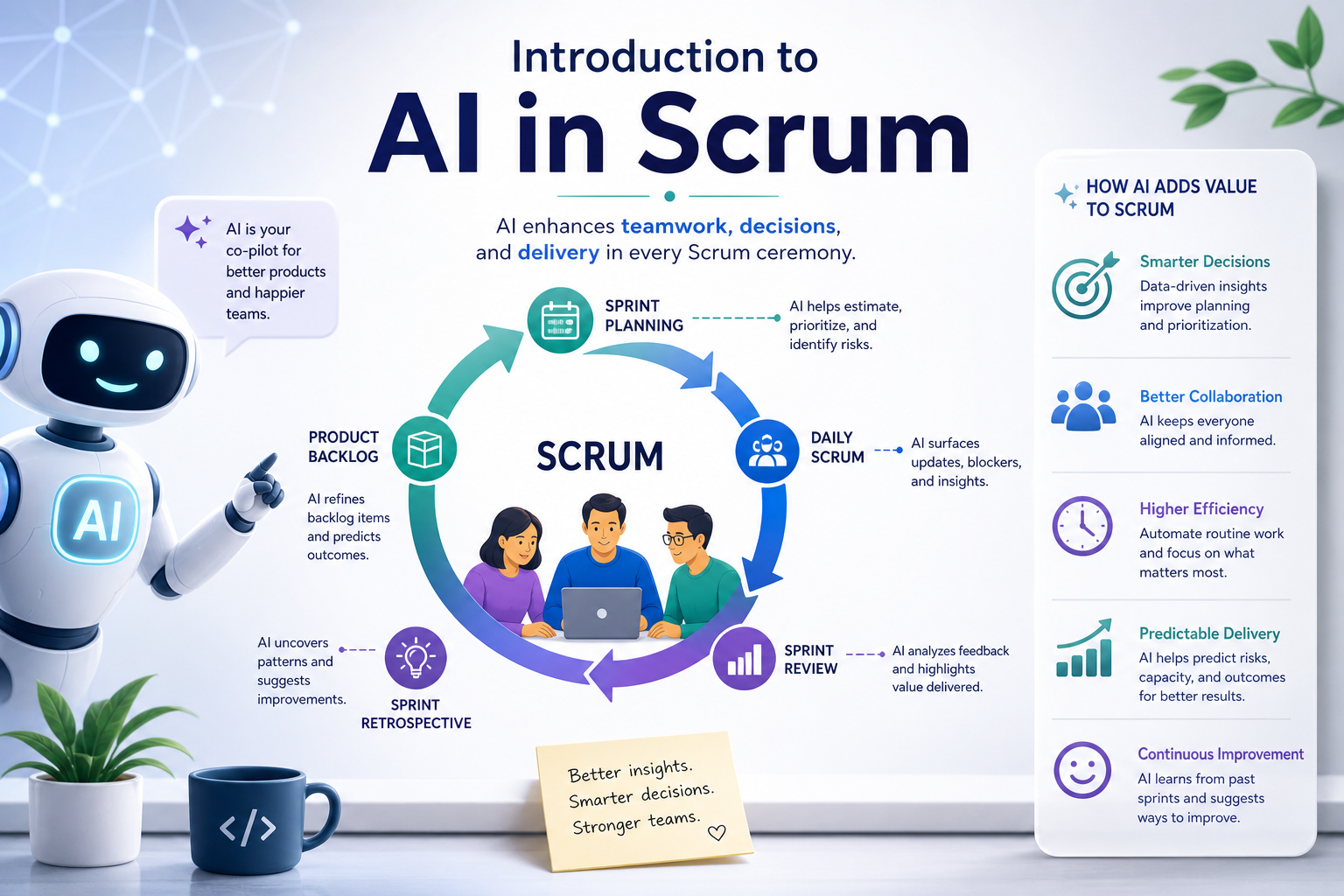
This section introduces the integration of Artificial Intelligence (AI) into Scrum Agile projects, focusing on its significance within the finance sector. Understanding the synergy between AI and Scrum can enhance project efficiency and innovation, making it crucial for modern finance operations.
Learning Objectives
- Explain the relevance of AI in current project environments.
- Describe the basic principles of the Scrum Agile methodology.
- Understand the importance of integrating AI in Scrum for financial projects.
-
Introduction
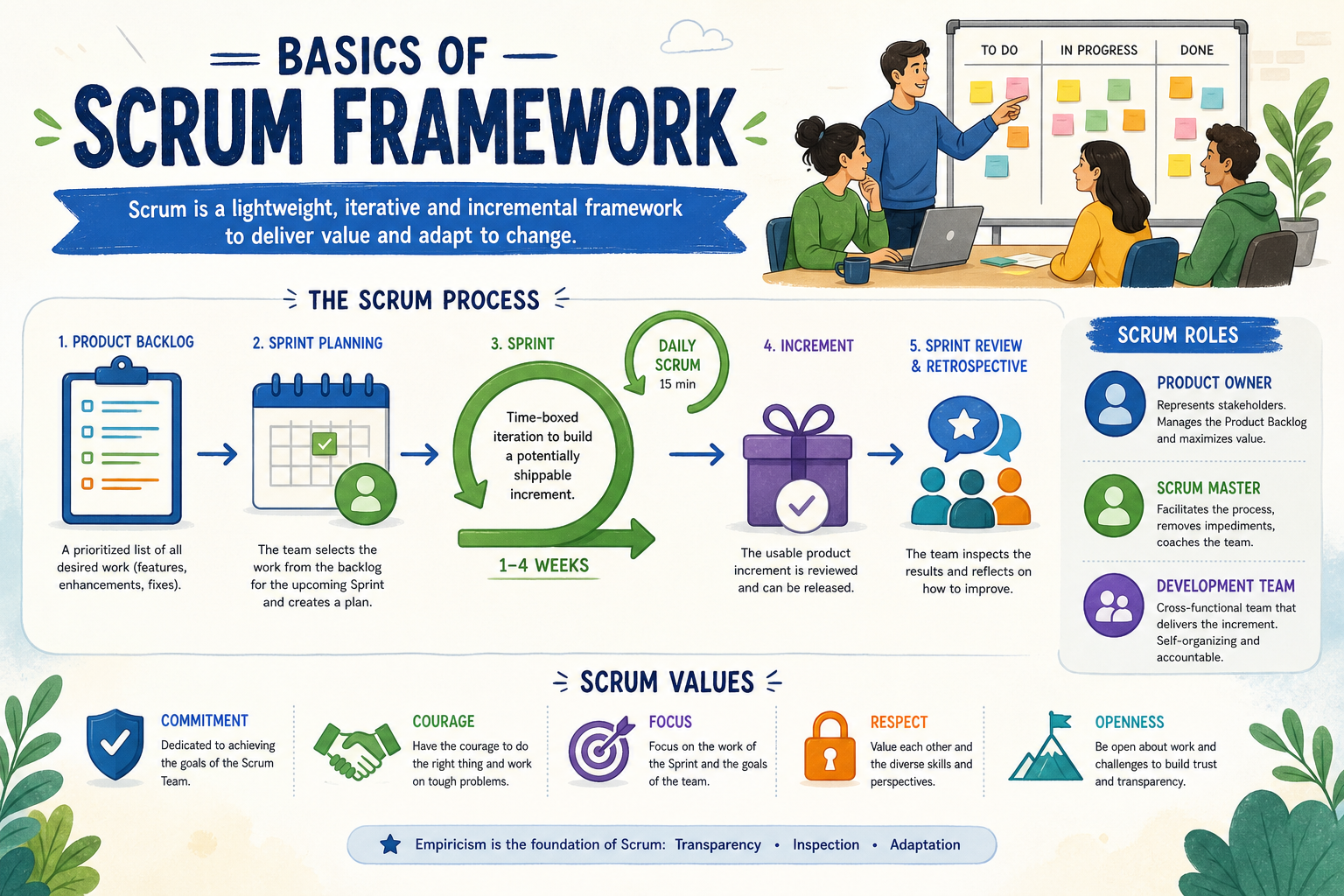
In this section, you'll explore the fundamental components of the Scrum framework, focusing on how they align with AI projects in the finance sector. Understanding Scrum's roles, events, and artifacts is crucial for integrating AI technologies effectively and maximizing their benefits within financial contexts.
Learning Objectives
-
Identify the key components of the Scrum framework: roles, events, and artifacts.
-
Understand how Scrum values align with AI project objectives.
-
Recognize the advantages of using Scrum in financial projects.
-
-
Introduction
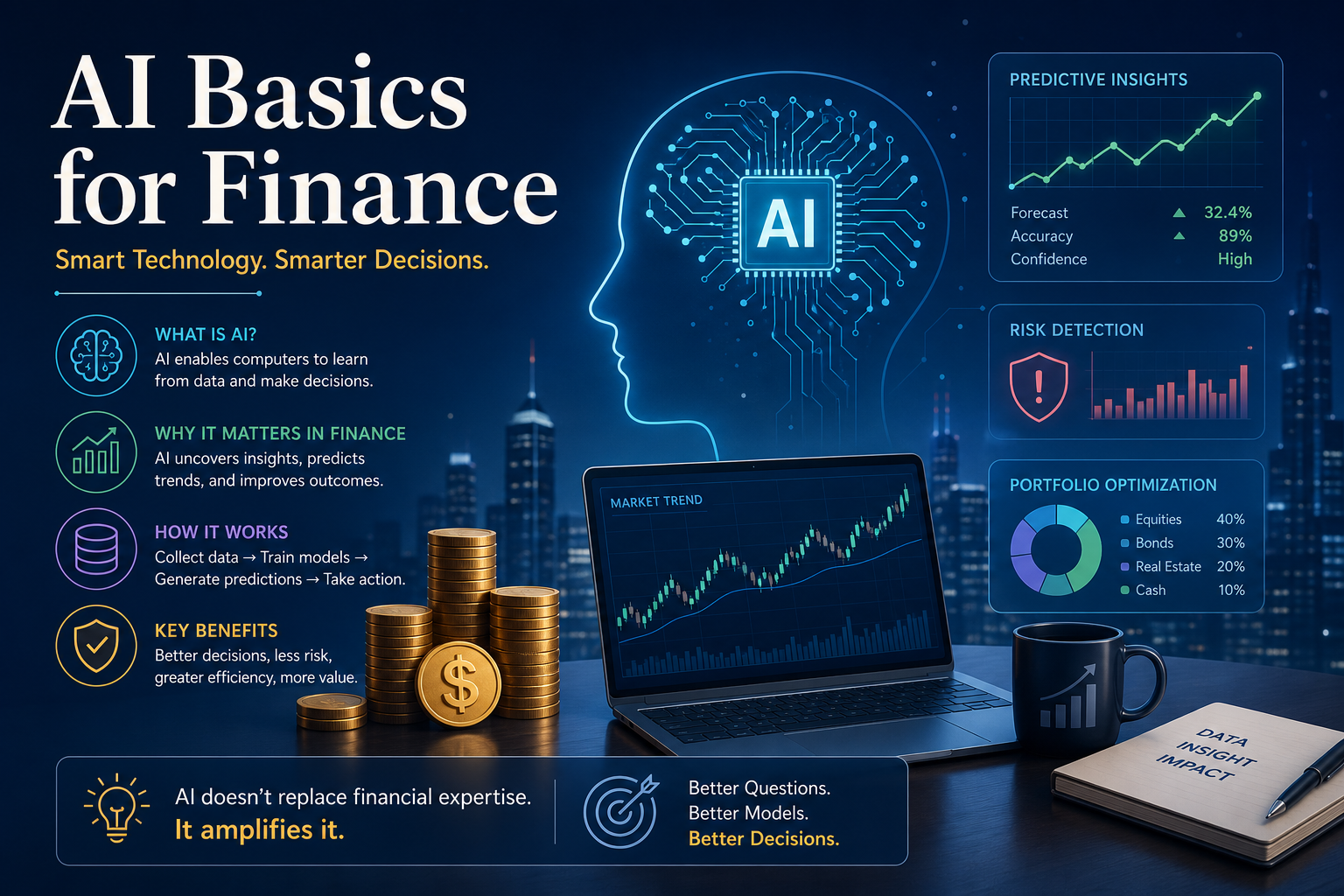
In this section, you will explore the foundational concepts of Artificial Intelligence (AI) and its transformative role in the finance industry. Understanding these basics is crucial for leveraging AI to optimize financial operations, enhance decision-making processes, and stay competitive in this rapidly evolving sector.
Learning Objectives
- Understand the basic concepts of AI, including Machine Learning and Data Analysis.
- Analyze how AI is transforming the finance industry.
- Recognize ethical considerations in AI applications within finance.
-
Introduction
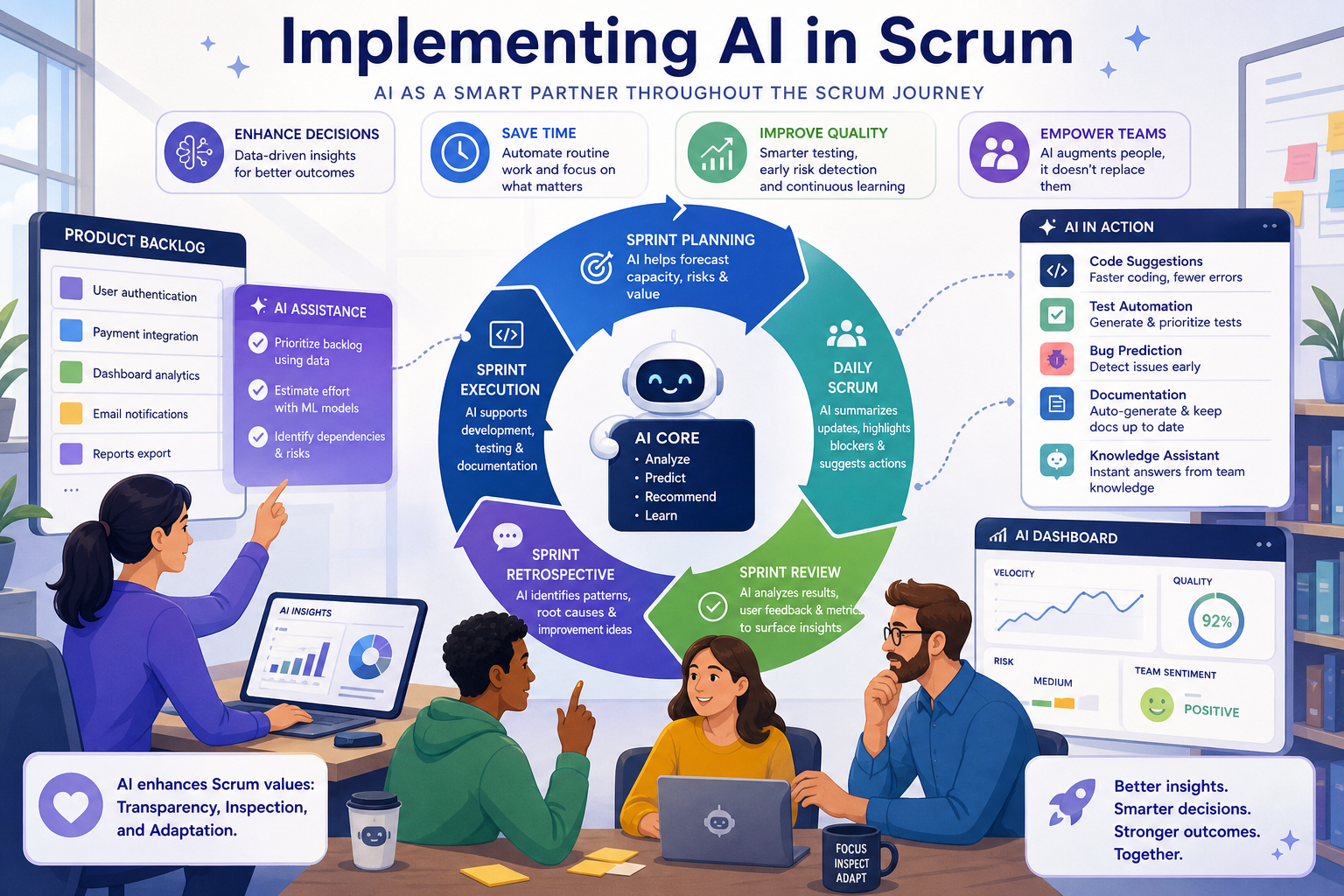
This section focuses on the practical implementation of AI tools within the Scrum framework, specifically tailored for finance projects. With the rapid advancements in AI, integrating these technologies into Scrum processes can significantly enhance efficiency and decision-making in financial organizations.
Learning Objectives
- Understand the steps for integrating AI tools into Scrum sprints effectively.
- Identify potential AI-driven improvements specific to finance projects.
- Recognize the challenges and solutions for adopting AI in a Scrum environment.
-

Introduction
In this concluding section, we will consolidate key learnings from the course: AI, Scrum, and their integration in the finance sector. This review is crucial for understanding how AI and Agile methodologies work together to drive innovation and efficiency in financial projects. Emphasizing core concepts will prepare you for future applications and learning paths in these dynamic fields.
Learning Objectives
-
Review essential concepts of AI and Scrum as applied to financial projects.
-
Understand the integration process of AI within Scrum frameworks in the finance industry.
-
Identify future learning opportunities in AI and Agile methodologies for continued professional growth.
-