When executives ask “show me the line from strategy to control”

A common moment in AI programs happens right after early wins: a pilot looks good, adoption is rising, and suddenly someone senior asks a question that stops the room: “If this goes wrong, what controls do we have—and how do we prove them?” It might be a regulator inquiry, a customer complaint, a board risk question, or a procurement negotiation with a critical vendor. The uncomfortable truth is that many organisations can describe their AI strategy and list their AI projects, but they cannot trace each initiative to the specific controls, evidence, and owners that make it defensible.

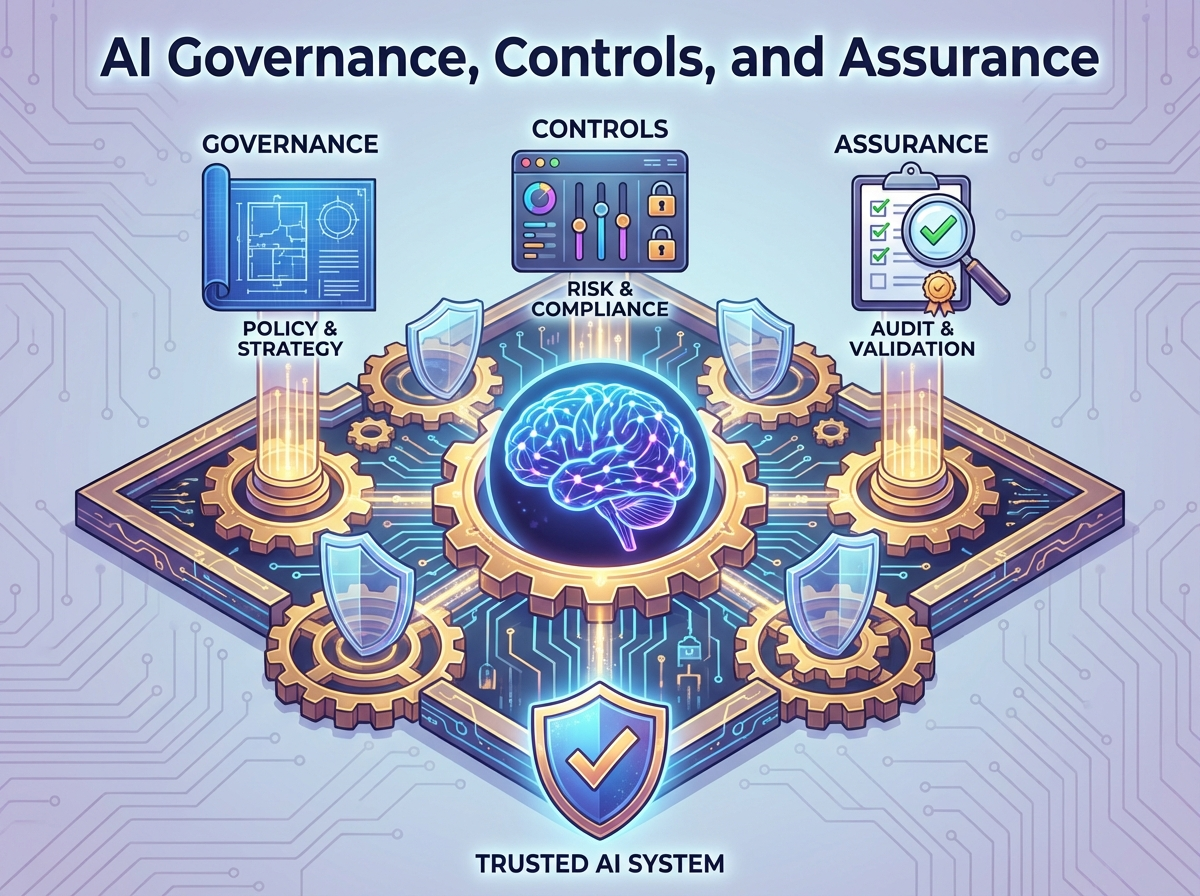
That’s what a strategy-to-control map fixes. It turns “governance” from a set of policies into an executable, auditable connection between why you are building AI and how you keep it safe and reliable in production. It also prevents a predictable failure mode: teams shipping faster than the organisation can monitor, approve, and support—so the first incident becomes the first time governance gets taken seriously.

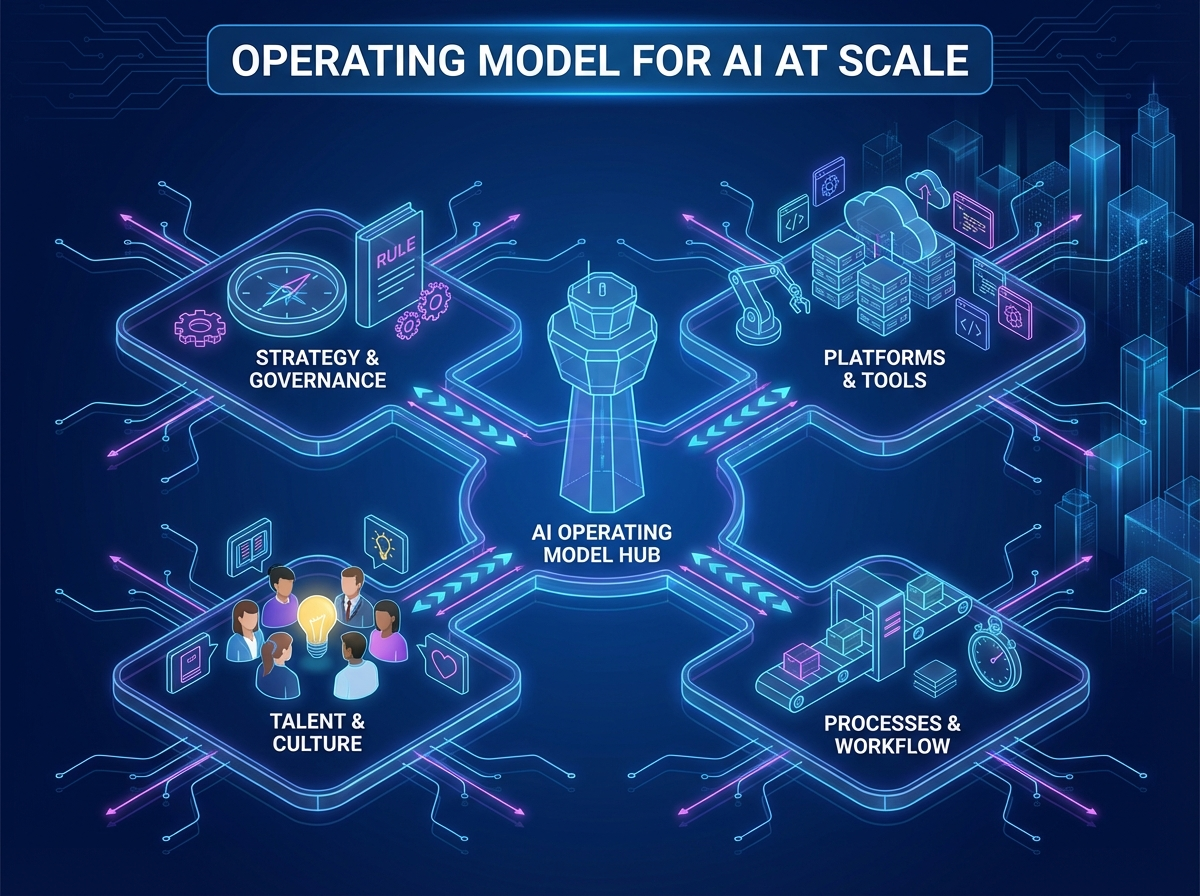
In this lesson, you’ll learn how to build a clear mapping structure that links strategy → portfolio → delivery workflow → controls → monitoring & evidence, and how to make that map risk-based so you don’t slow everything down equally.


The strategy-to-control map: what it is (and what it isn’t)

A strategy-to-control map is a lightweight but rigorous artifact that connects four things:

  • Strategic intent (value themes and measurable outcomes)

  • Use cases (your portfolio of AI initiatives)

  • Risk tier and failure modes (what can go wrong, and how severe it is in context)

  • Controls + evidence (what reduces the risk, who owns it, and what proof exists)

It helps to define a few terms precisely:

  • Risk tiering: A classification that scales governance based on impact and autonomy—e.g., who is affected, whether decisions are automated, sensitivity of the domain, and the data involved. The point is speed with control: low-risk tools move quickly; high-impact systems get deeper review.

  • Control: A mechanism that reduces risk in practice. Controls can be technical (access control, logging, DLP/redaction), process (approvals, human review, change management), or contractual (vendor SLAs, audit rights, data-use limits).

  • Evidence: The artefacts that prove controls operate consistently—logs, evaluation reports, model cards, approval records, incident tickets, version history, monitoring dashboards with thresholds and alerts.

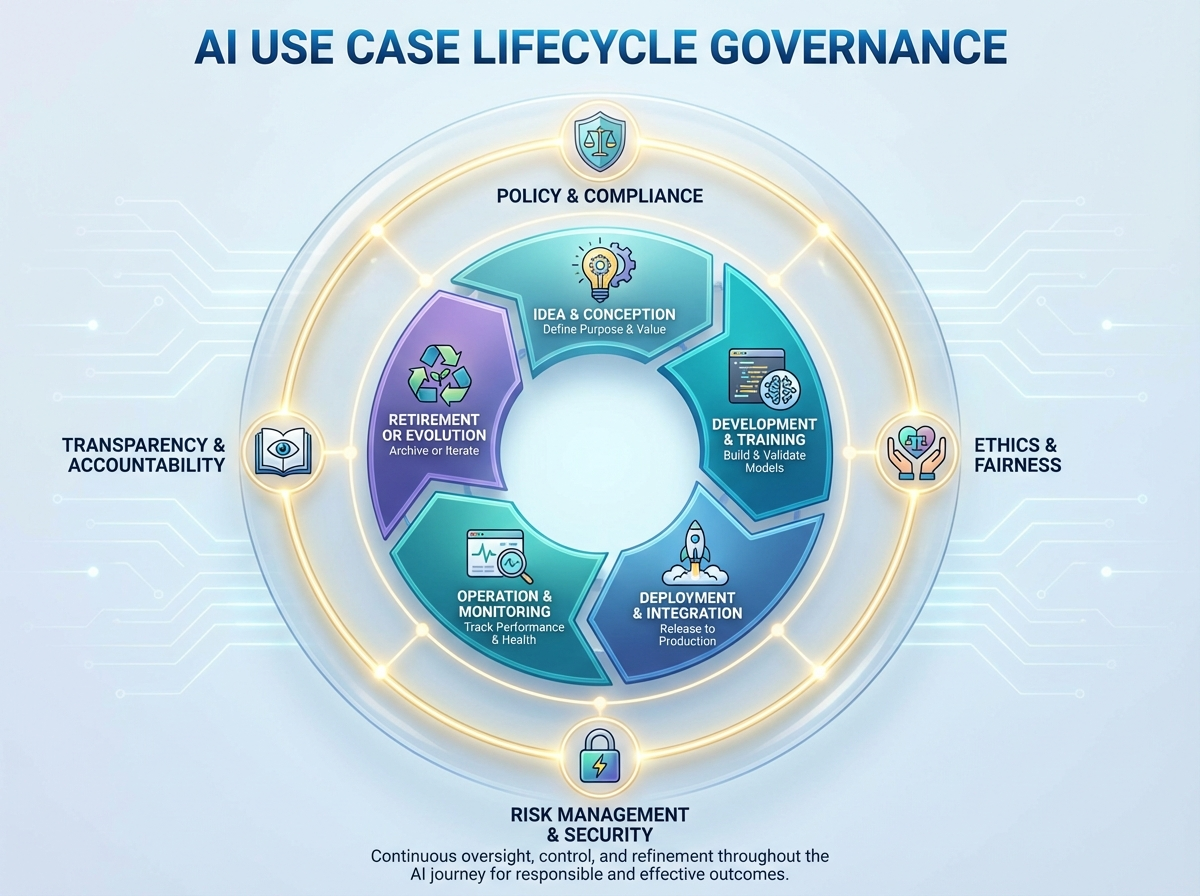
The key principle is governance by design. Instead of treating governance as a final sign-off, you embed controls into delivery so that safe operation is the default. That directly addresses common issues from AI programs: vendor model updates changing behavior, prompts drifting, upstream data changes, and “paper governance” that can’t survive an audit.

A useful analogy: if AI is like accounting, a strategy-to-control map is the equivalent of linking financial objectives to internal controls and audit evidence—segregation of duties, approvals, reconciliations, and logs. You can still move fast, but you never have to “reconstruct the truth” after something breaks.


How the map works: from one strategic bet to provable control

1) Start with strategy and make it testable in operations

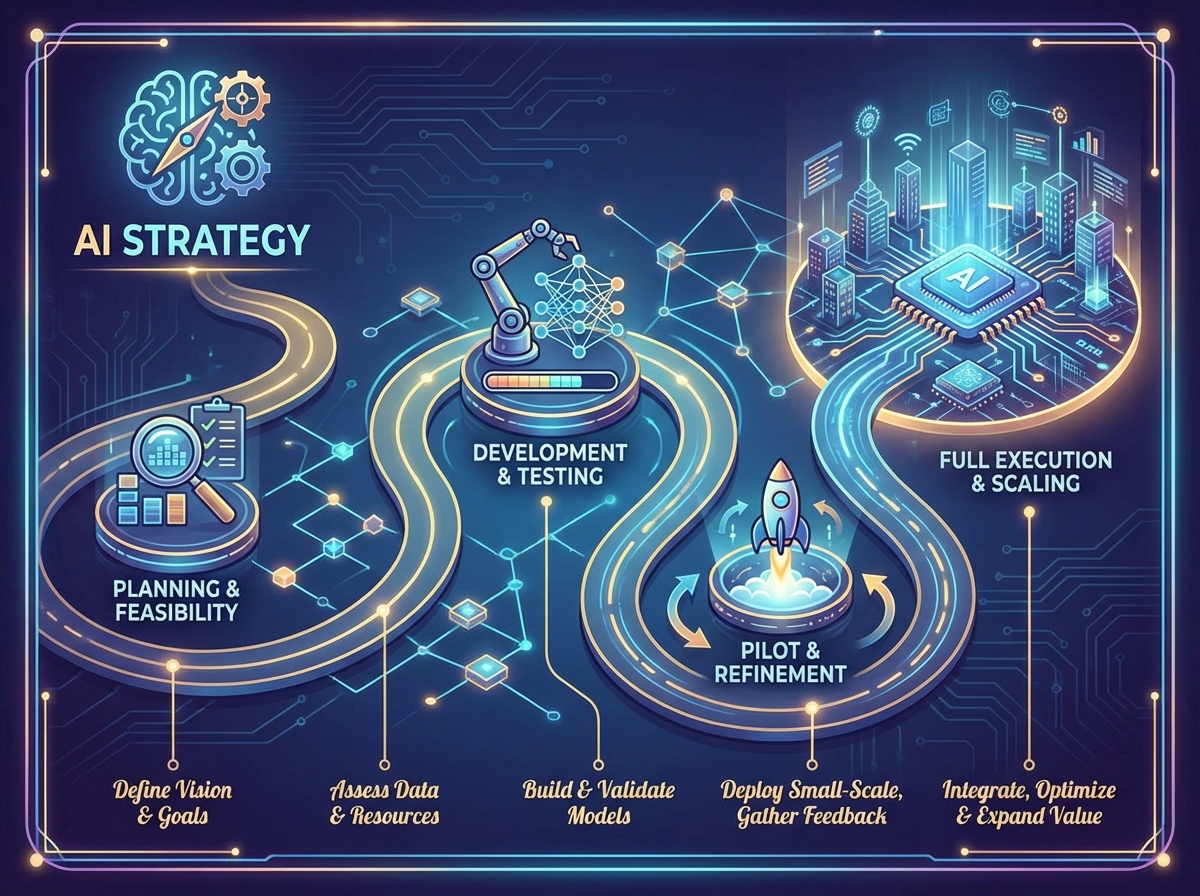
A map starts with strategic intent because controls can’t compensate for vague value. In practice, strategy becomes governable when it is expressed as a small set of value themes (e.g., reduce service cost, reduce fraud losses, improve conversion) and each theme has measurable outcomes. This matters because monitoring later must answer, “Is this system still producing the intended value without crossing risk thresholds?”

The best practice is to write strategy in a way that forces operational detail: where AI acts, who it affects, and what constraints apply. For example, “Improve customer service” is too broad; “Reduce average handle time by 15% using an agent-assist drafting copilot, while keeping human approval and full logging for audit” is operationally meaningful. This style also prevents “AI everywhere” from turning into dispersed pilots with no consistent ownership.

Common pitfalls show up early here. One is confusing roadmaps with decision criteria: teams can list initiatives but can’t explain why they were selected over alternatives. Another is assuming all AI is the same; a low-risk “autocomplete” and a high-impact “underwriting decision engine” cannot share the same control expectations. A third pitfall is forgetting that AI strategy is dynamic—vendors change models, regulations tighten, and data distributions drift—so strategy must expect change control and ongoing monitoring as part of the cost of ownership.

A typical misconception is that risk belongs only to compliance. Strategy is where risk appetite is set: what error rates are acceptable, what domains require explainability, where human oversight is mandatory, and which data is off-limits. If you skip this, governance becomes late-stage friction, because delivery teams discover constraints after they have already built the wrong thing.

2) Translate portfolio items into risk-aware delivery obligations

Once strategy identifies “where AI should matter,” you need each use case to carry explicit delivery and control obligations. The strategy-to-control map makes this visible by tying each portfolio item to: workflow placement, automation level, data sensitivity, regulatory context, and third-party dependencies. Those attributes determine the tier and therefore the governance depth.

A strong approach is to treat AI as a socio-technical change: it alters a workflow, not just a model. That means delivery obligations include user experience constraints (“AI-drafted text must be clearly labeled”), decision-rights decisions (“human approves before sending”), and operational readiness (“who is on call, what is the rollback plan”). This is exactly where many pilots fail when scaling: a model demo succeeds, but operations can’t support it, and the organisation can’t prove control.

Best practices here align with risk-based stage gates. Low-risk internal productivity tools can use lightweight review plus baseline controls (access control, vendor due diligence, basic logging). High-impact decision systems require deeper validation: documented evaluation protocols, bias and performance testing, human-in-the-loop design, and rigorous change management. The map prevents two extremes: heavy governance everywhere (slows value) or governance at the end (creates rework and “control theatre”).

Pitfalls are typically integration-related. Teams underestimate dependencies like identity and access management, data pipelines, and vendor contracts. AI also fails in “non-obvious” ways: a prompt change alters behavior materially, a vendor model update shifts outputs, or an upstream data schema change breaks features. If the portfolio item isn’t mapped to controls for versioning, monitoring thresholds, and incident response, you will not be able to explain or contain those failures.

A common misconception is that a single “accuracy number” equals readiness. In a map, model metrics are only one slice—you also need operational metrics (latency, cost per request, uptime), user metrics (adoption, override/edit rates), and control metrics (review coverage, exception rate). Executives and auditors care about the whole system, not just the model.

3) Turn risk categories into controls you can actually evidence

The heart of the strategy-to-control map is the link between failure modes and controls + evidence. AI risks span more than bias: privacy and confidentiality, security, IP/licensing, reliability and drift, explainability needs, third-party dependency risk, and operational resilience. The map forces you to move from generic concerns (“hallucinations are bad”) to enforceable requirements (“drafting only; retrieval-limited context; agent approval required; prompts and outputs logged; unsafe-content filters enabled; monitoring with thresholds and escalation”).

Best practice is to define a simple risk-to-control logic that scales. For example, a higher tier might require: formal approval records, evaluation reports with edge cases and adversarial tests, stronger access control and logging, documented incident response, and more frequent monitoring. Lower tiers might require fewer artefacts but still enforce baseline controls around data access and vendor management. This mirrors the idea from the end-to-end model: governance is a continuous design constraint, not a paperwork exercise at the end.

Common pitfalls are all evidence-related. A team might say “the vendor is compliant” without contractual audit rights or data-use clarity. Or “we tested it” without keeping the evaluation set, results, and version identifiers. Or “we have a policy” without technical enforcement like DLP/redaction, prompt guards, access controls, and audit logs. Auditors and regulators don’t accept intent; they accept repeatable processes and artefacts.

A misconception worth correcting: documentation isn’t the goal—control effectiveness is. Evidence exists to prove a control operates reliably over time, especially under change. That’s why versioning and change control matter so much: if you can’t show what changed (model version, prompt, data pipeline), monitoring will detect issues but you won’t be able to attribute causes or prove the system is “under control.”

The table below shows what this translation looks like when done well.

Mapping dimension What you capture Why it matters Typical evidence
Strategic intent Value theme, target outcomes, scope boundaries, risk appetite notes Prevents opportunistic pilots and clarifies acceptable trade-offs Strategy memo/OKRs, portfolio decision record
Workflow placement Where AI acts (drafting, recommendation, decision, agentic action), human oversight rules Automation level drives risk tier and control strength Process map, UI designs, RACI/decision rights
Data sensitivity What data flows into/out of the system; redaction/minimisation plan Reduces privacy/confidentiality risk and limits blast radius Data lineage, access logs, DLP reports
Model lifecycle controls Validation approach, versioning, change management, rollback plans AI behavior changes over time; you need explainability and containment Evaluation reports, model cards, change tickets
Operational resilience Monitoring thresholds, incident response, vendor dependency assumptions Prevents “monitoring without action” and unmanaged outages Dashboards, alert logs, incident tickets, SLAs

[[flowchart-placeholder]]


Two patterns your map should make obvious

Pattern A: Controls scale with autonomy and impact (not with “AI-ness”)

Risk tiering is most useful when it tracks what the system can do and who it can harm, not whether it uses ML or GenAI. A drafting copilot that requires human approval is a different category than a model that automatically declines credit or triggers purchase orders. The strategy-to-control map should make this distinction visible so governance effort stays proportional.

Best practice is to anchor tiering on a few consistent drivers:

  • Impact scope: internal-only vs customer-facing vs affecting individuals’ rights or outcomes.

  • Automation: decision support vs automated decisions vs agentic execution.

  • Sensitivity: regulated domain and data sensitivity.

  • Reversibility: can errors be caught and corrected before harm occurs?

  • Dependency risk: reliance on third-party APIs or models that can change unexpectedly.

The pitfall is tiering by convenience—everything becomes “medium risk,” so either nothing gets controlled well, or everything slows down. Another pitfall is treating tier as static; if automation increases over time (draft → recommend → auto-act), the tier must change, and the map should force a control upgrade. A misconception is that human-in-the-loop always makes a system safe; if humans rubber-stamp due to workload or UI design, oversight is performative, and the map should demand evidence like override rates and sampling audits.

Pattern B: “Prove control” depends on monitoring + change management, not just pre-launch testing

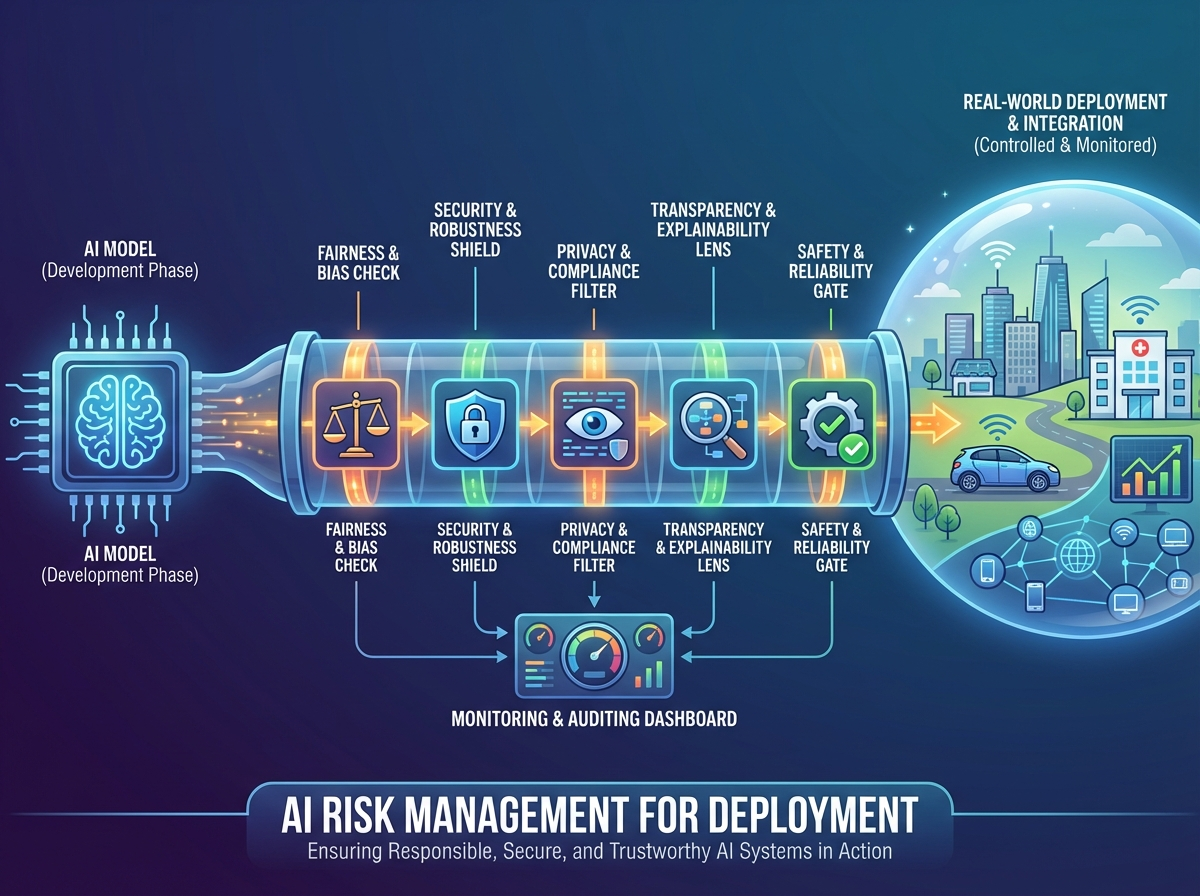
Many organisations test once, deploy, and then discover reality: drift, vendor updates, prompt tweaks, seasonality, and edge cases change outcomes. A strategy-to-control map should therefore treat monitoring as a control, not an accessory. If you promise a risk posture, you need a way to detect when the system violates it.

Best practice is to define monitoring across three dimensions:

  • Model quality: drift, calibration, hallucination/unsafe output rates for GenAI, and performance by segment.

  • Operational health: latency, uptime, and cost per request—especially with third-party dependencies.

  • Control effectiveness: review coverage, exception frequency, and incident response performance against thresholds.

Pitfalls include dashboards without owners (“monitoring without action”) and unversioned changes. If a prompt is updated or a vendor model version shifts, your evidence trail can break instantly, and you won’t be able to explain performance changes to auditors or executives. A common misconception is that retraining is the primary fix; often you get more safety and value from tightening workflow constraints, improving UI, narrowing scope, and strengthening review triggers.


Applied example 1: Customer service copilot in a regulated firm (bank/insurer)

Start with the strategic intent: reduce average handle time and improve response consistency while maintaining customer trust and regulatory compliance. In the map, the workflow placement is explicit: the system drafts responses and retrieves policy-approved snippets, but a human agent approves before sending. That single design choice changes the risk tier, because errors can be intercepted before reaching the customer—if oversight is real and measurable.

Next, map the main failure modes to concrete controls. Privacy and confidentiality risk drives data minimisation (only necessary context), redaction of sensitive fields where possible, and strict access controls so only authenticated agents can use it. Hallucination and conduct risk drives content filters for disallowed advice, and an evaluation set rich in policy edge cases and prohibited scenarios. Third-party dependency risk drives vendor due diligence, clear SLAs, and a rollback route if quality drops or the API becomes unstable.

Finally, define evidence and monitoring so you can “prove control.” You log prompts and outputs for audit, track unsafe-content flags, and monitor agent override/edit rates as a proxy for quality and reliance. You also watch downstream signals: customer complaints tied to AI-assisted replies, escalation rates, and incident tickets. The benefit is speed with guardrails: agents get drafting help without granting the model decision authority. The limitation is residual risk—hallucinations can still occur—so the map reinforces a scoped role (drafting + retrieval) rather than autonomous commitments.


Applied example 2: Demand forecasting with automated ordering in retail

Strategically, the retailer targets on-shelf availability and reduced waste, using ML forecasting to improve replenishment. In the map, the critical choice is automation level: forecasting as decision support is lower risk than forecasts that automatically generate purchase orders. If leadership wants automated ordering, the map should immediately drive a higher tier and stronger controls because financial loss and contractual issues become plausible outcomes.

Delivery obligations flow directly from that tier. Data readiness and operational fit become explicit: prediction horizon, SKU-store granularity, and how promotions/holidays/price changes are represented. Validation is not only average error; you require backtesting across seasons and stress tests for distribution shifts (new store openings, supplier disruptions). The map also captures workflow controls: planners must see confidence and drivers, and overrides must be captured with reasons—both to improve the system and to ensure accountability.

Controls and evidence then focus on change management and resilience. For auto-ordering, you establish thresholds and exception rules: high-value orders, high-uncertainty forecasts, or unusual spikes require human review. Monitoring tracks drift, error by segment, and business outcomes like fill rate and waste, plus operational health of the pipeline. Versioning becomes non-negotiable: if performance changes, you must show which model/data pipeline version changed and when. The benefit is scalable operational efficiency; the limitation is exposure to external shocks, which is why the map emphasizes detection, escalation paths, and rollback—not blind automation.


The map in one sentence—and what to watch for

A strategy-to-control map is how you make AI execution traceable: every meaningful use case can be followed from strategic intent to workflow design, to risk tier, to controls, to monitoring and evidence. Done well, it reduces late rework, speeds approvals, and increases trust because risk is managed as part of delivery—not as a surprise at the end.

The most important takeaways:

  • Strategy becomes governable only when it’s operational: clear outcomes, scope boundaries, and risk appetite by domain.

  • Tiering prevents governance overload by scaling controls with impact, autonomy, and sensitivity.

  • Controls must be paired with evidence—policies alone don’t survive audits, incidents, or vendor changes.

  • Monitoring + change management is the difference between “tested once” and “under control over time.”

Next, we’ll build on this by exploring Practical Takeaways & Next Steps Plan [20 minutes].

Last modified: Friday, 6 March 2026, 6:05 PM