When AI ships… and the organisation doesn’t move
A bank launches an ML model that recommends credit limits. A month later, the model metrics look healthy, but underwriters ignore it, overrides spike, and frontline leaders complain it “creates more work.” Meanwhile, Legal is frustrated because decision logs aren’t consistent, and Operations is worried about who’s on-call when the model drifts. The project is technically delivered—but strategically stalled.
This is the gap executive teams underestimate: AI changes decisions and workflows, not just software. If leaders don’t align on what will change, who absorbs the change, and what risks must be governed in daily operations, then even a well-prioritised, well-sequenced roadmap becomes a set of isolated deployments.
This lesson focuses on executive alignment and change impacts: how to create real agreement at the leadership level, what “alignment” must include (beyond enthusiasm), and how to anticipate the organisational friction that quietly kills adoption and increases risk.
What “executive alignment” really means in AI execution
Executive alignment is a shared, decision-grade agreement among senior leaders about three things:
-
The outcome chain: what the AI intervention changes in operations, and how that produces business or risk outcomes.
-
The operating model: who owns the AI system in production (including monitoring, incidents, and updates), and what decisions are now made differently.
-
The change load: what new work, training, incentives, controls, and dependencies the organisation must absorb to get the benefit safely.
A critical distinction: alignment is not the same as “approval.” Approval often happens at the level of a use case list (“top 5 AI ideas”). Alignment happens at the level of trade-offs—for example, agreeing that Shipping H1 safely requires decision logging and workflow instrumentation, even if that slows the first release, because it unlocks scaling and governance later.
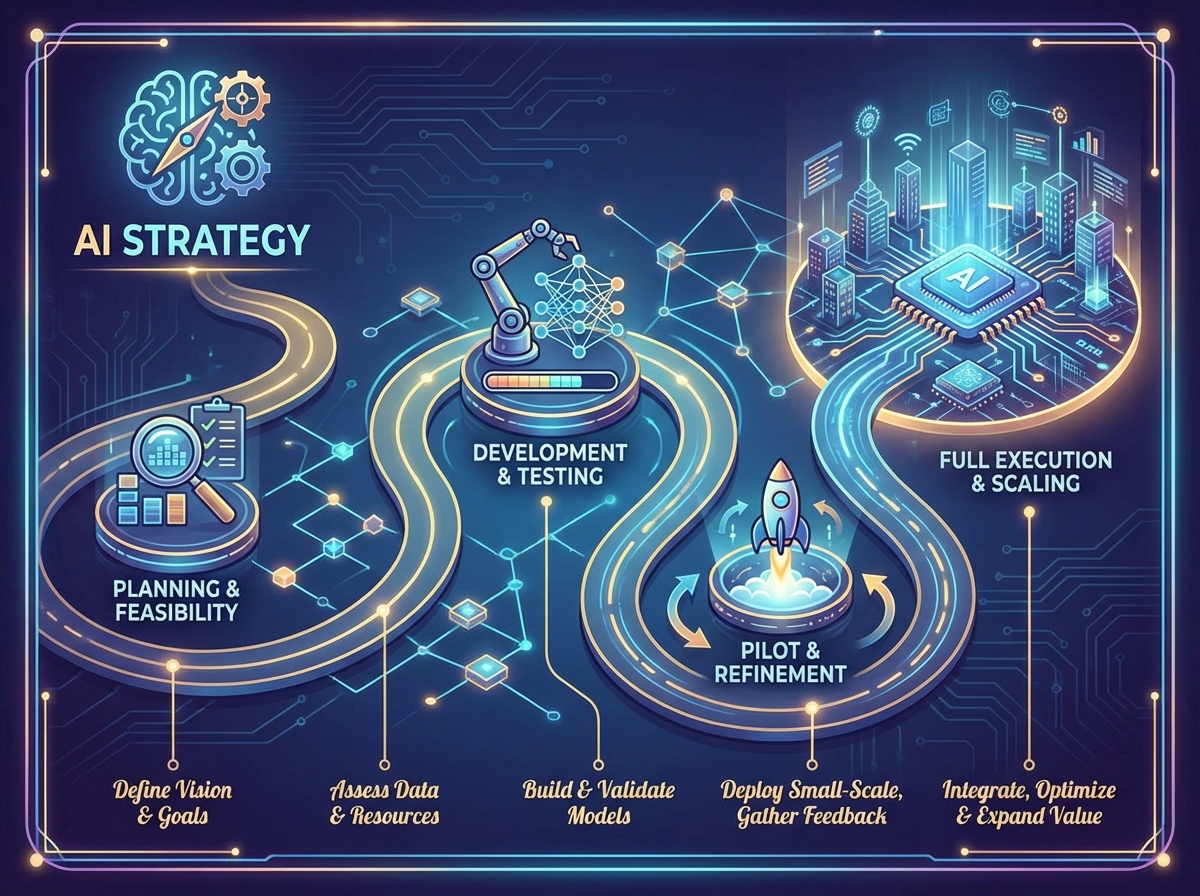
This lesson connects to the earlier emphasis on outcome chains and layered metrics. Executives need a consistent narrative that links model/data health to operational performance to business outcomes, with counter-metrics that prevent harm or gaming. It also connects to roadmap execution: dependencies (data rights, integration, governance controls, operational ownership) are not “project details”; they are leadership commitments that determine whether change sticks.
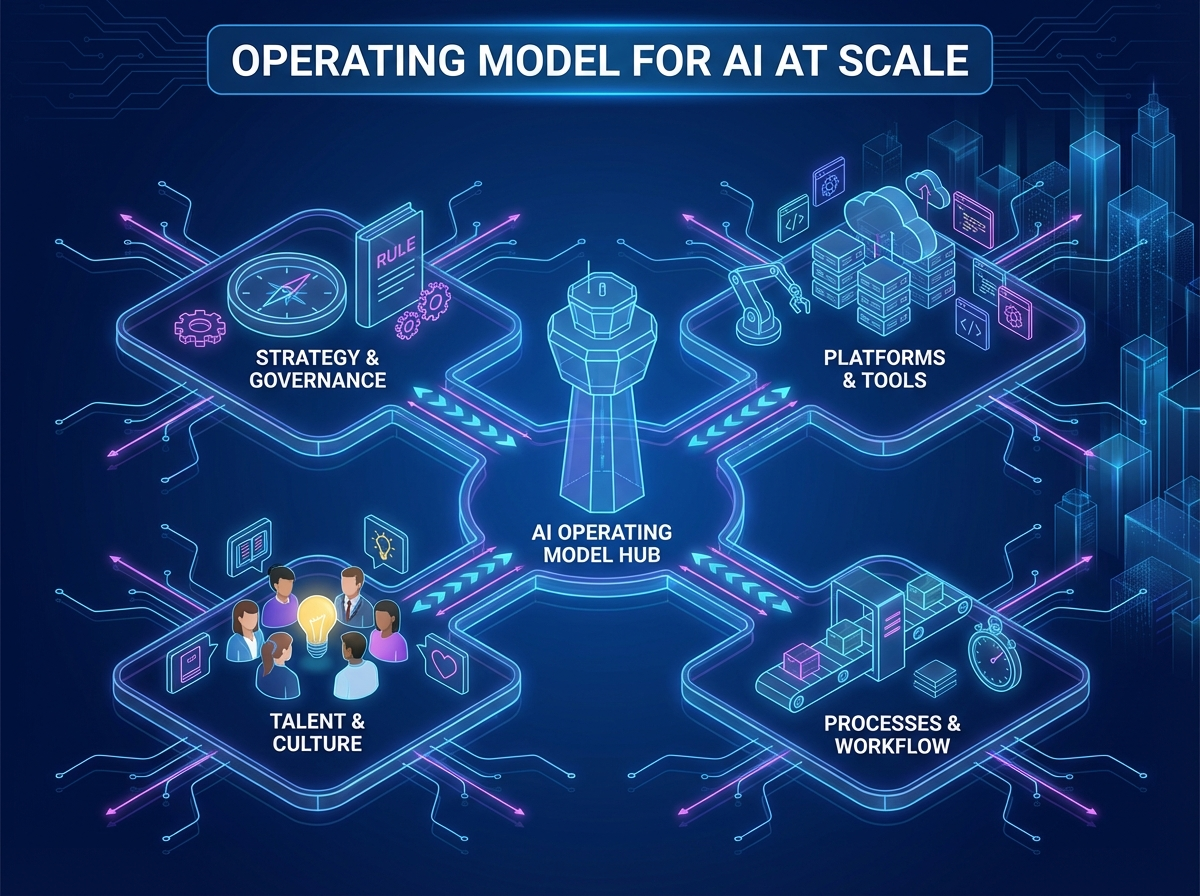
A useful analogy: executive alignment in AI is like agreeing to change the rules of a factory line. You don’t just install a new machine; you redesign inspection, accountability, escalation procedures, and throughput expectations—otherwise the “upgrade” creates chaos.
The alignment package: outcomes, constraints, and non-negotiables
Alignment becomes concrete when leaders align on a small, standard “package” for each AI initiative (or initiative cluster). The goal is not bureaucracy; it’s to prevent late-stage surprises—especially around shared bottlenecks like Legal, Security, or data engineering.
1) Align on the outcome chain, not the model
Executives often get pulled into model talk (“Is it 92% accurate?”) when they need to align on operational change (“What decision is changing, and what happens downstream?”). The outcome chain forces clarity: if the AI output doesn’t change a human decision, a workflow step, or a customer interaction, the business impact will be weak or unmeasurable.
This is where earlier metric discipline matters. Leaders should expect a layered view:
-
Model/data health metrics (drift, coverage, eval quality for genAI).
-
Operational metrics (cycle time, acceptance/override, rework, escalations).
-
Business/risk outcomes (loss rates, churn, complaint rates, cost-to-serve).
-
Counter-metrics (guardrails against harmful “wins,” like faster responses but higher repeat contact).
A typical misconception is that once you have a KPI (say, “reduce handling time”), the rest will follow. In practice, AI often shifts work rather than removing it. Without operational instrumentation—like override reasons captured in the UI or escalation categories—leaders can’t tell whether the AI improved decisions or just moved effort elsewhere.
Best practice is to require baseline + comparison method (A/B test, before/after, matched cohorts) at alignment time, not after rollout. If the organisation can’t establish measurement integrity, executives should treat the initiative as “learning-only” rather than “scale-ready,” because you won’t be able to defend investment decisions later.
2) Align on feasibility constraints as leadership trade-offs
In many organisations, feasibility constraints are politely ignored until delivery hits a wall. AI makes this worse because the constraints are socio-technical: integration paths, human adoption, data rights, monitoring, auditability, and on-call ownership. You saw in roadmap design how unowned dependencies create a traffic jam; executive alignment is where leaders decide whether to fund and prioritise the unblocking work.
A simple way to frame feasibility for executives is: “What must be true to ship this responsibly?” Examples:
-
Data rights and access are cleared (including how PII is handled).
-
Workflow instrumentation exists to observe behaviour change (acceptance, edits, overrides, rework).
-
Integration and production support are defined (latency, failure modes, fallback).
-
Governance controls are built-in (logging, redaction, oversight rules, audit trail).
-
Named operational ownership exists (RACI, incident response, retraining triggers).
A common pitfall is treating these as “engineering details.” They aren’t. They determine whether the organisation can operate the AI system safely at scale and whether the claimed impact is credible. Leaders also need to align on capacity caps: if legal review or data engineering is a bottleneck, then “start all projects” is not a strategy.
Best practice is to convert constraints into explicit gates that executives endorse. Gates remove politics from execution: teams don’t argue about priorities every week; they work the prerequisite until evidence is produced.
3) Align on risk posture and operational controls (not just compliance sign-off)
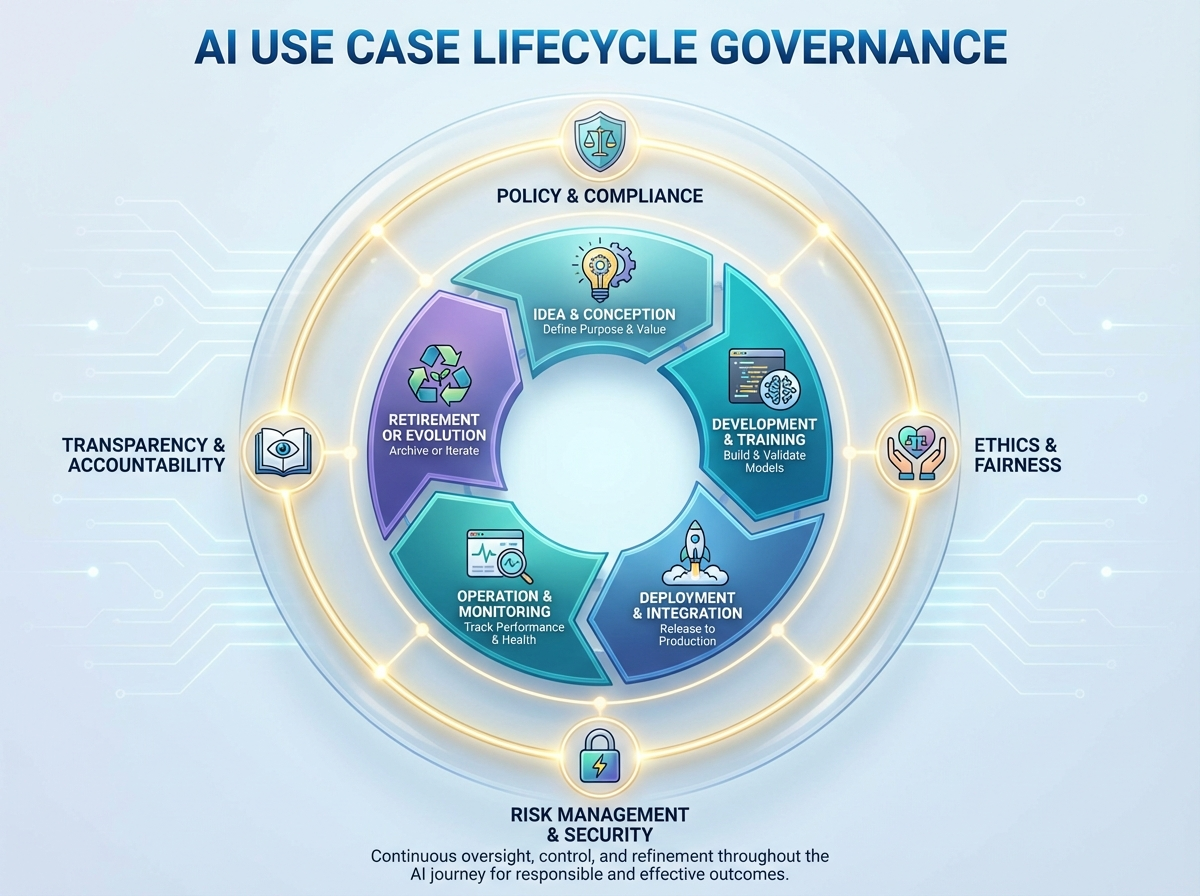
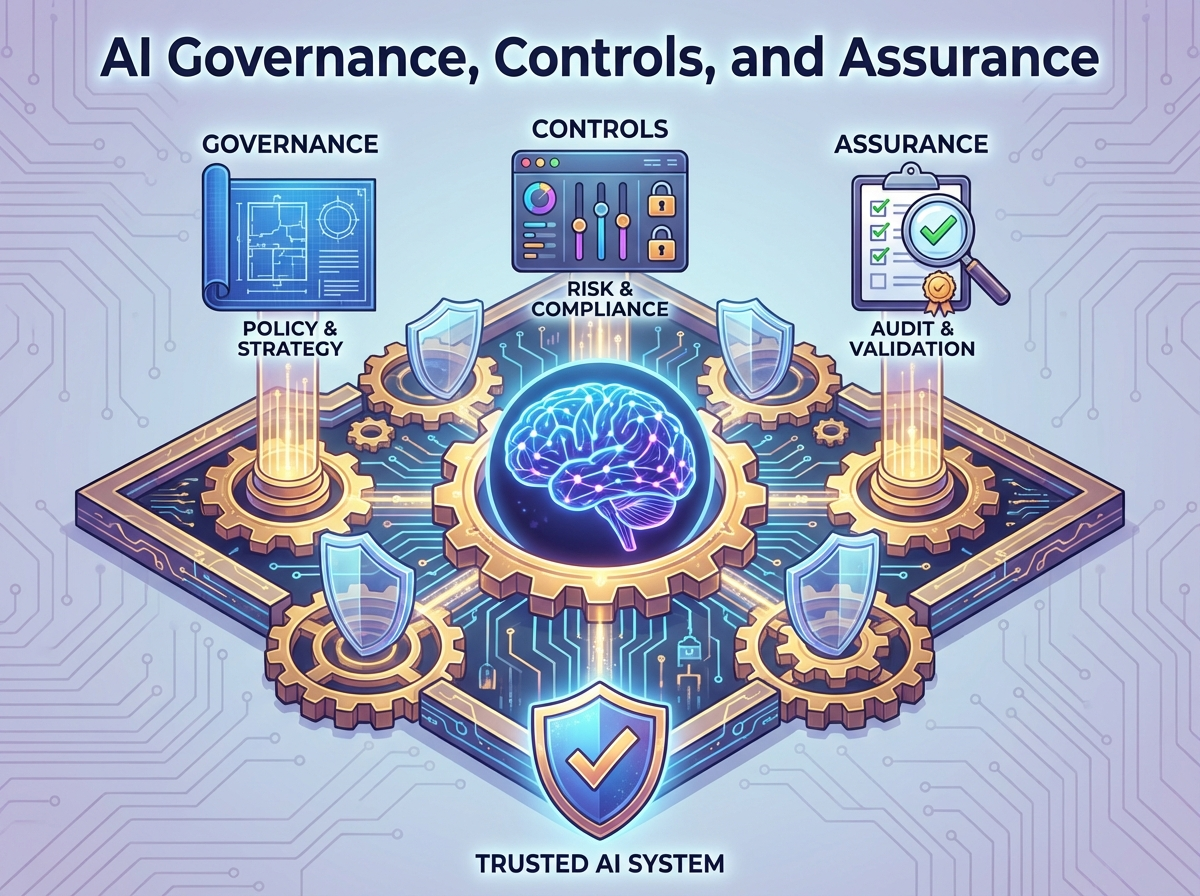
AI risk is not a checkbox at launch; it’s a continuous operating condition. Executive alignment must include risk posture: what harms are unacceptable, what oversight is required, how incidents are handled, and how quickly the organisation can roll back or restrict behaviour when something goes wrong.
This is especially visible in the two archetypes from earlier content:
-
GenAI in customer-facing workflows: risks include hallucinations, policy misstatements, PII leakage, and inconsistent tone or commitments.
-
ML in decisioning workflows (e.g., credit): risks include auditability gaps, inconsistent adverse-action reasoning (where relevant), drift-driven performance decay, and unfair outcomes.
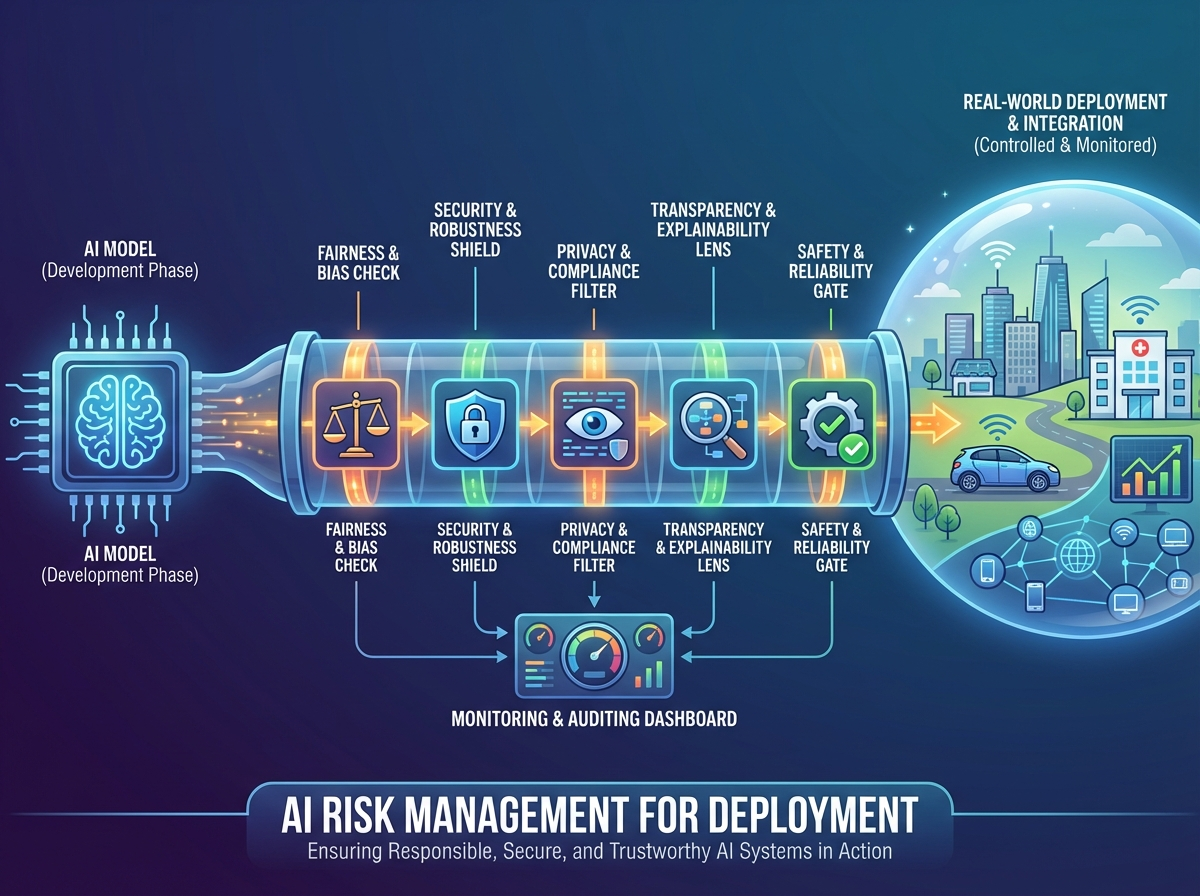
A typical misconception is: “If Legal approves it once, risk is managed.” In reality, risk emerges through usage, data shifts, and workflow workarounds. Controls like logging, redaction, citations, evaluation harnesses, and incident playbooks must be designed into the system early—exactly as the roadmap lesson argued: risk controls are cheaper and more reliable when they’re built-in rather than bolted on.
Best practice is to align on a small set of non-negotiables that travel with every deployment: decision logging, monitoring ownership, and an incident process. If executives can’t agree on these, scaling will either stall—or proceed in a way that quietly accumulates unacceptable risk.
Seeing the change impacts before they become resistance
Even when executives agree on outcomes and controls, AI still fails if leaders don’t account for the human and organisational impacts. Change impacts are predictable, and they’re manageable when treated as part of design.
The four predictable change impacts
-
Decision-right shifts AI often changes who decides what. A recommender model doesn’t “automate”; it reshapes accountability. If underwriters remain accountable for outcomes but are pressured to follow the model, resistance is rational unless oversight and escalation rules are clear.
-
Workload redistribution AI frequently reduces time in one step but increases time elsewhere (editing, validation, exception handling). Without workflow instrumentation, leaders see “time saved” claims that frontline staff can’t recognise.
-
Incentive and KPI misalignment If call centre agents are rewarded for speed, a genAI assistant may increase risky behaviour (sending unverified responses) unless counter-metrics (repeat contact, complaint rate) and quality checks are aligned.
-
New operational obligations AI introduces monitoring, evaluation, retraining triggers, audits, and incident response. If no budget, headcount, or ownership is assigned, the system degrades and trust collapses.
These impacts tie directly to the earlier “dependency map” concept. Change management is not a separate workstream; it is the operational feasibility layer of AI delivery.
A leadership view of change impacts (so alignment is real)
The easiest way to make change impacts visible is to compare the “before” and “after” operating reality across multiple dimensions.
| Dimension | Before AI | After AI (if aligned and well-designed) |
|---|---|---|
| Decision flow | Decisions rely on human judgment with informal rationale, sometimes inconsistently documented. | Decisions become a human+AI system with explicit rules for when AI is advisory vs binding, and how overrides are handled and logged. |
| Accountability | Outcome accountability sits with the function (e.g., underwriting, support), but tooling ownership is clearer. | Accountability splits: business owns outcomes, platform/ML owns model health, and a named operational owner coordinates incidents and change approvals. |
| Work measurement | Process metrics exist, but the “why” behind outcomes is often opaque. | Workflow instrumentation captures acceptance/override, rework, edits, escalations, and enables counter-metrics to detect harm or gaming. |
| Risk management | Risk governance often happens through periodic reviews and manual sampling. | Risk controls are designed in: logging, audit trail, redaction, citations for genAI, drift monitoring, and a defined incident playbook. |
| Capacity constraints | Bottlenecks are visible (IT queues, policy reviews), but impact is limited to projects. | Bottlenecks multiply across the AI portfolio unless leaders cap in-flight work and fund shared dependencies (logging, eval harnesses, data rights). |
A common pitfall is assuming training alone solves adoption. Training helps, but adoption is mostly a product of incentives, workflow usability, and trust. Executives should ask: “What will make the frontline choose this system on a bad day?” The answer is usually clarity on overrides, reduced friction, and proof the tool improves outcomes without increasing risk.
Two applied examples leaders can align on quickly
Example 1: GenAI customer support assistant (speed without hidden quality loss)
A retailer deploys a genAI assistant that drafts replies and retrieves policy content. Executives want reduced time-to-first-response, but frontline leaders worry about policy mistakes and inconsistent commitments. Alignment starts by making the outcome chain explicit: AI changes drafting and retrieval behaviour, which should reduce handling time and improve responsiveness, without increasing repeat contacts or complaints.
Leaders align on H1 scope and controls before scaling. They constrain the rollout to a subset of ticket categories and require workflow instrumentation: acceptance rate, edit distance (how much agents rewrite), escalation rate, and repeat contact within 7 days as a counter-metric. They also align on governance controls as non-negotiables: PII redaction in prompts, retrieval with citations, and logging of prompt/output plus source documents for audit and incident review. This makes quality measurable instead of debated.
Limitations are surfaced early: genAI “quality” is not a single number, and improvements can be illusory if agents spend extra time validating outputs. The executive decision is not “Is genAI good?” but “Are we willing to invest in instrumentation and evaluation so we can scale safely?” When that decision is explicit, teams avoid the common failure mode of shipping fast and discovering risk and adoption problems only after reputational damage.
Example 2: ML credit decision support (auditability and operating readiness as gates)
A lender wants an ML model to recommend credit limits and reduce decision time. Value is high, but the risk and dependency burden is heavier. Executives align first on the operating model: the model will be decision support, not full automation, until auditability and stability are proven. They define the outcome chain and measurement approach: operational metrics like decision time and override rates, plus leading indicators that approximate long-term risk outcomes while acknowledging that true loss outcomes lag.
Alignment then turns into gates. Leaders require a complete decision trail: log model inputs, outputs, and the reason codes used in the workflow, and capture override reasons in the underwriting UI. They also require operational readiness: drift monitoring with thresholds, a rollback procedure, and named ownership for on-call and incident response. Without these, the model may be “accurate” but not operable in a regulated, auditable environment.
The limitation is patience: credit outcomes take time, so leaders can’t declare success based on approval rate alone. The aligned approach is to scale in horizons: prove measurement integrity and operational stability first, then expand coverage. This prevents the common misconception that “a strong pilot equals readiness.” In high-impact decisioning, readiness is defined by auditability, monitoring, and governance, not by model performance in a sandbox.
[[flowchart-placeholder]]
A clean close: what aligned executives do differently
Executive alignment in AI is a commitment to operational change with governance, not a vote of confidence in a technology. When it’s done well, it prevents the two portfolio killers: scaling systems you can’t operate safely, and shipping systems the organisation won’t adopt.
Key takeaways:
-
Align on the outcome chain and layered metrics, including counter-metrics, so “impact” means real operational and business change.
-
Treat feasibility as leadership-owned constraints: dependencies, bottlenecks, gates, and capacity caps are strategic decisions, not project trivia.
-
Make risk controls built-in and operational: logging, monitoring, oversight rules, and incident response are part of the product, not an end-stage review.
-
Explicitly plan for change impacts (decision rights, workload shifts, incentives, and operational obligations) so adoption is designed, not hoped for.
A checklist you can trust
-
Outcome chains + decision-grade measurement turn AI ambition into measurable operational change, with baselines and counter-metrics to prevent harmful “wins.”
-
Prioritisation and roadmapping only work when leaders accept constraints—dependencies, bottlenecks, and gates are what make execution real rather than aspirational.
-
Governance is an operating model: logging, auditability, monitoring, and ownership must be designed in so systems can scale safely and predictably.
-
Change impacts are the real work of AI transformation: decision rights, incentives, workload shifts, and frontline trust determine whether AI produces value.
You can now evaluate an AI initiative the way an operator would: not “is the model good?”, but “will the organisation change, will impact be provable, and can we run this safely at scale?”