

Sorry, this activity is currently hidden
Section outline
-
Introduction
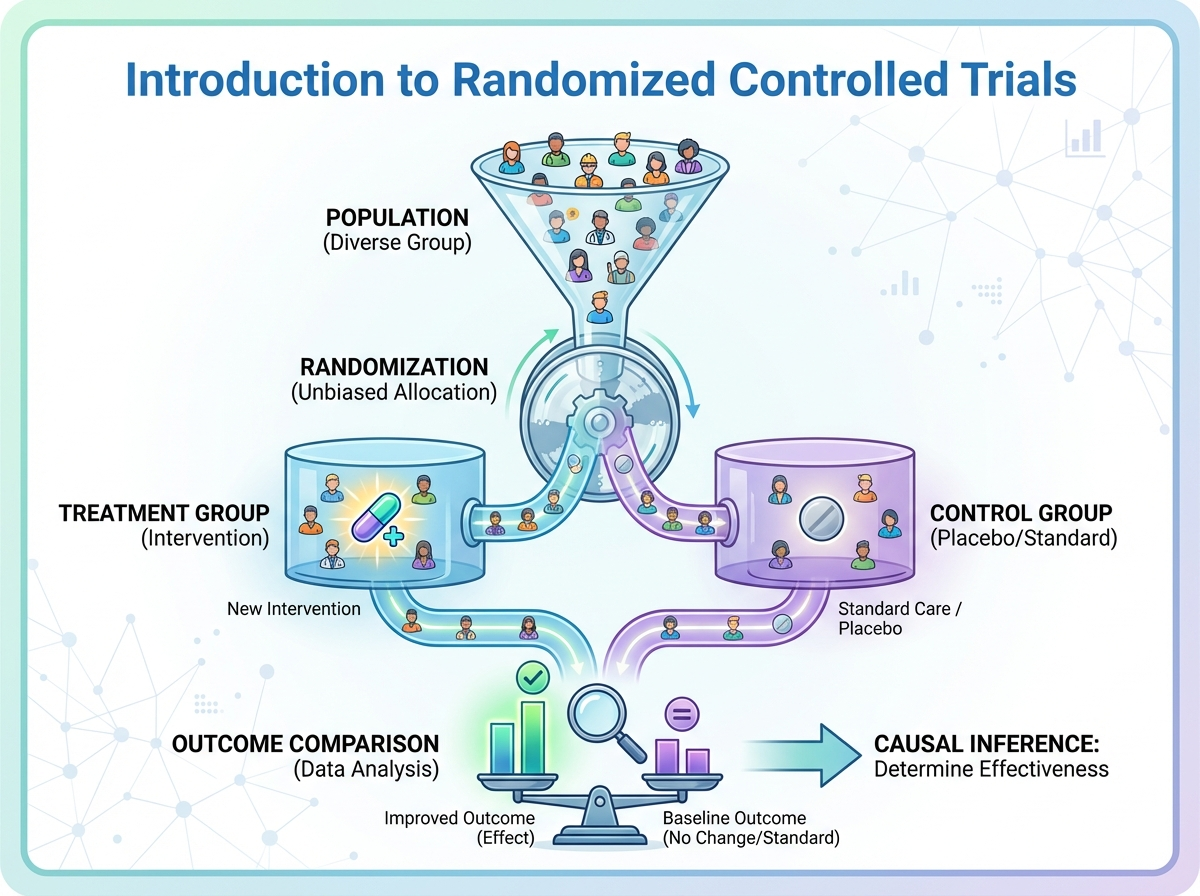
Randomized Controlled Trials (RCTs) are a cornerstone of educational research, providing rigorous methods for evaluating the effects of interventions within educational settings. Understanding the foundational aspects of RCTs is crucial for educators and researchers aiming to implement data-driven improvements in educational practices. This section will equip you with a solid foundation in the key concepts, importance, and differentiation of RCTs compared to other research methodologies, enhancing your ability to contribute meaningfully to educational advancements.
Learning Objectives
By the end of this section, participants will be able to:
- Define the key concepts and terminology associated with RCTs.
- Articulate the importance and unique advantages of RCTs in educational research.
- Differentiate between RCTs and other common educational research methods.
-
Introduction
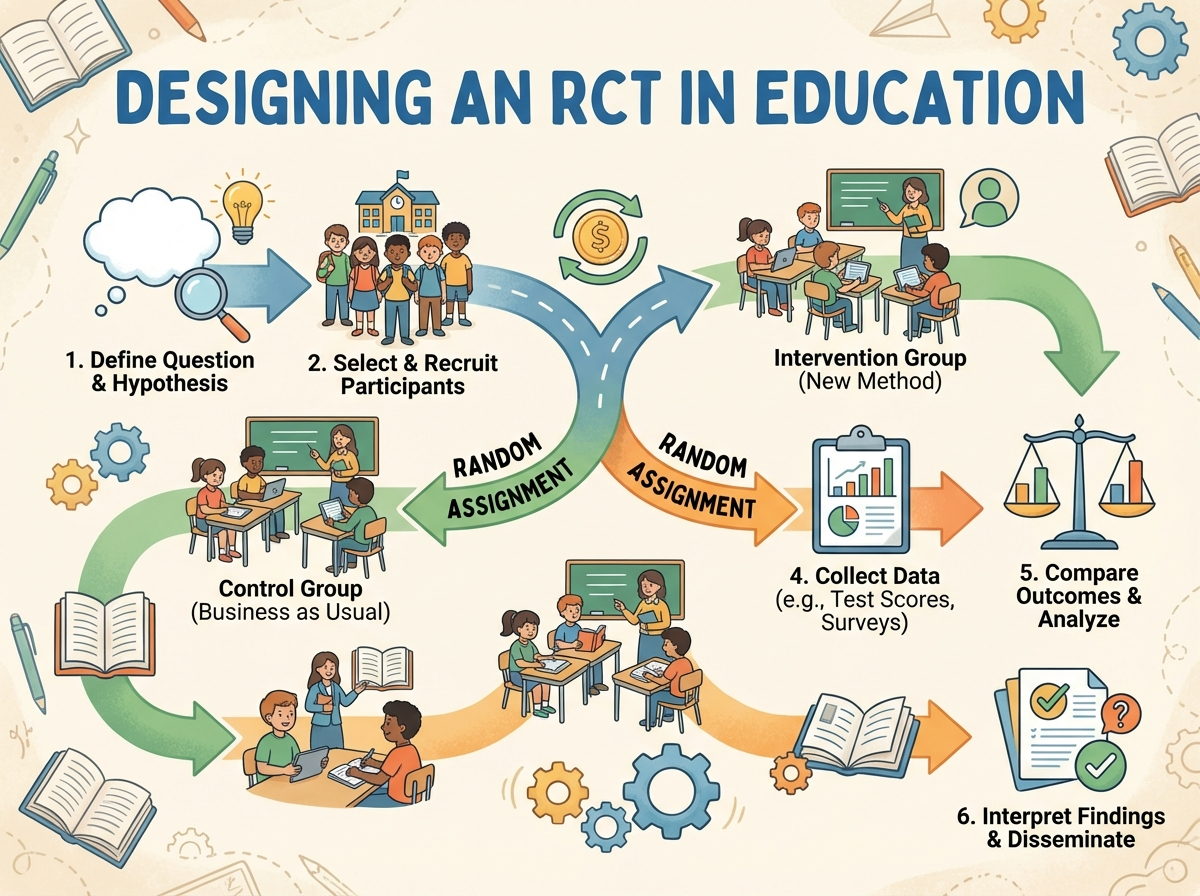
In this section, you'll explore the critical steps involved in designing a randomized controlled trial (RCT) within the educational field. RCTs hold tremendous value in educational research as they provide robust data for assessing the efficacy of educational interventions. By understanding how to properly design an RCT, educational researchers can contribute to evidence-based practices that ultimately enhance learning experiences and outcomes.
Learning Objectives
- Identify and formulate clear research questions and hypotheses relevant to educational contexts.
- Understand and apply effective randomization techniques and strategies in participant selection.
- Evaluate and address ethical considerations unique to conducting RCTs in educational settings.
-
Introduction
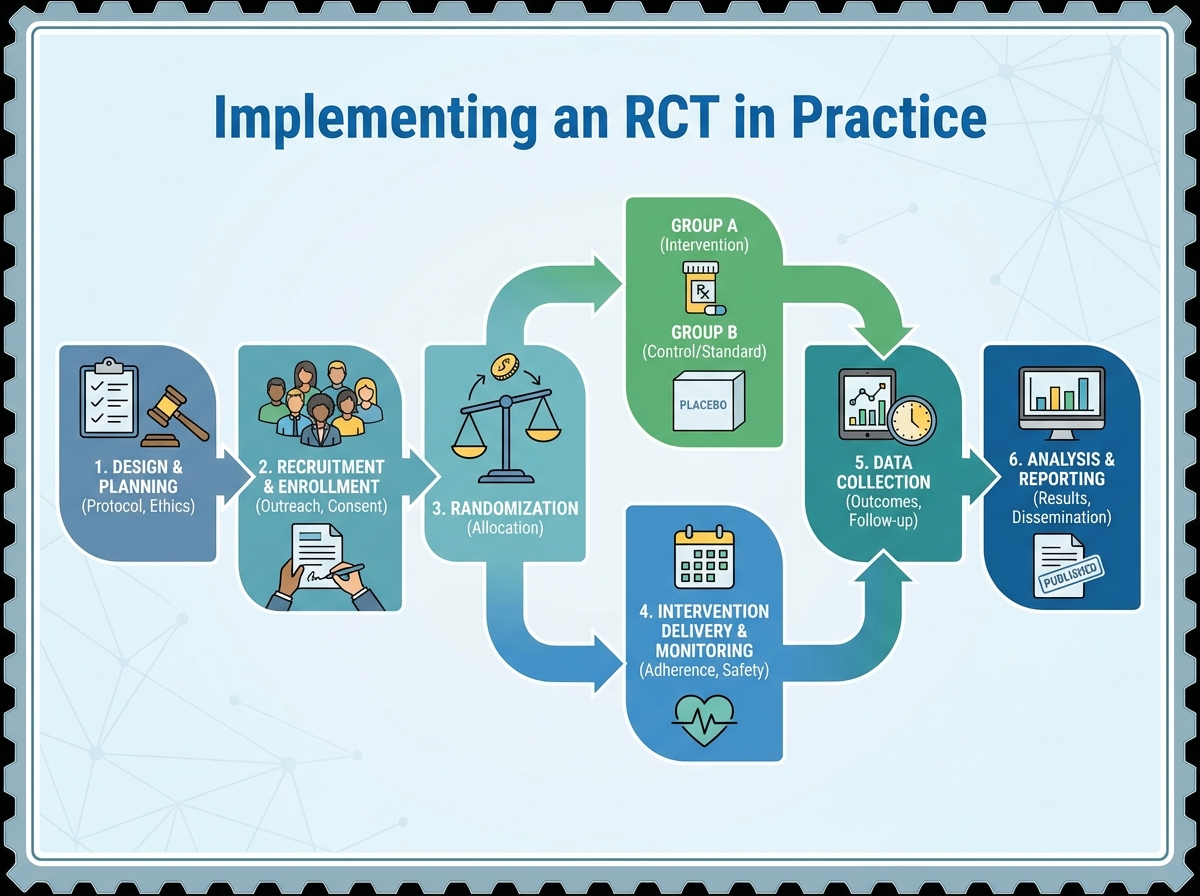
Implementing a Randomized Controlled Trial (RCT) in an educational setting is crucial for collecting reliable and valid data to inform educational research and practice. This section focuses on the practical aspects of conducting an RCT, ensuring that participants can manage and oversee trials effectively to yield meaningful insights. It covers essential skills for conducting a trial smoothly, addressing potential challenges that arise when working with educational institutions, thus empowering educational professionals to contribute to evidence-based research.
Learning Objectives
- Identify and apply effective data collection methods and tools tailored for educational RCTs.
- Recognize challenges inherent to implementing RCTs in educational environments and develop strategies to address them.
- Ensure data integrity and security throughout the RCT process.
-
Introduction
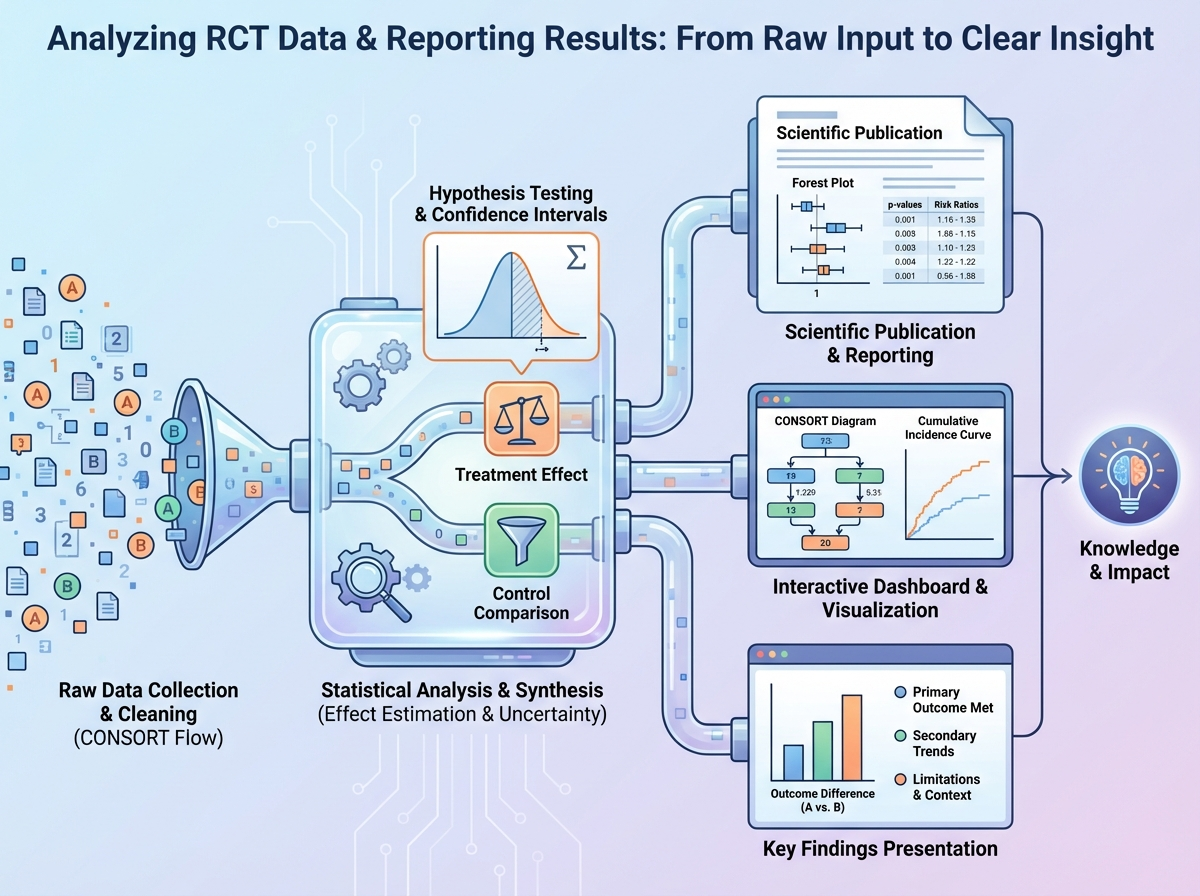
This section delves into the critical phase of analyzing data from Randomized Controlled Trials (RCTs) and effectively reporting findings. Understanding the nuances of data analysis and interpretation is essential for educators and researchers looking to validate their hypotheses and contribute credible knowledge within the educational sector. This section equips participants with the tools and best practices necessary for analyzing results and communicating their implications convincingly.
Learning Objectives
- Develop a foundational understanding of data analysis techniques used in RCTs within an educational context.
- Interpret the results of an RCT, taking into account specific considerations in educational settings.
- Apply best practices for reporting and publishing findings to enhance the impact of educational research.
-

Introduction
In this concluding section, you will consolidate your understanding of conducting randomized controlled trials (RCTs) within the educational sector. This review serves as a critical synthesis of the material covered in earlier sections, allowing you to reinforce and contextualize your learning. By highlighting essential concepts and preparing you for future applications in educational research, this section ensures you can effectively contribute to evidence-based practices in education.
Learning Objectives
- Summarize key concepts and methodologies involved in designing and implementing RCTs in an educational context.
- Evaluate the role of RCTs in advancing educational research and practice.
- Identify future learning opportunities and areas for application in the field of educational research.