

Section outline
-
Introduction
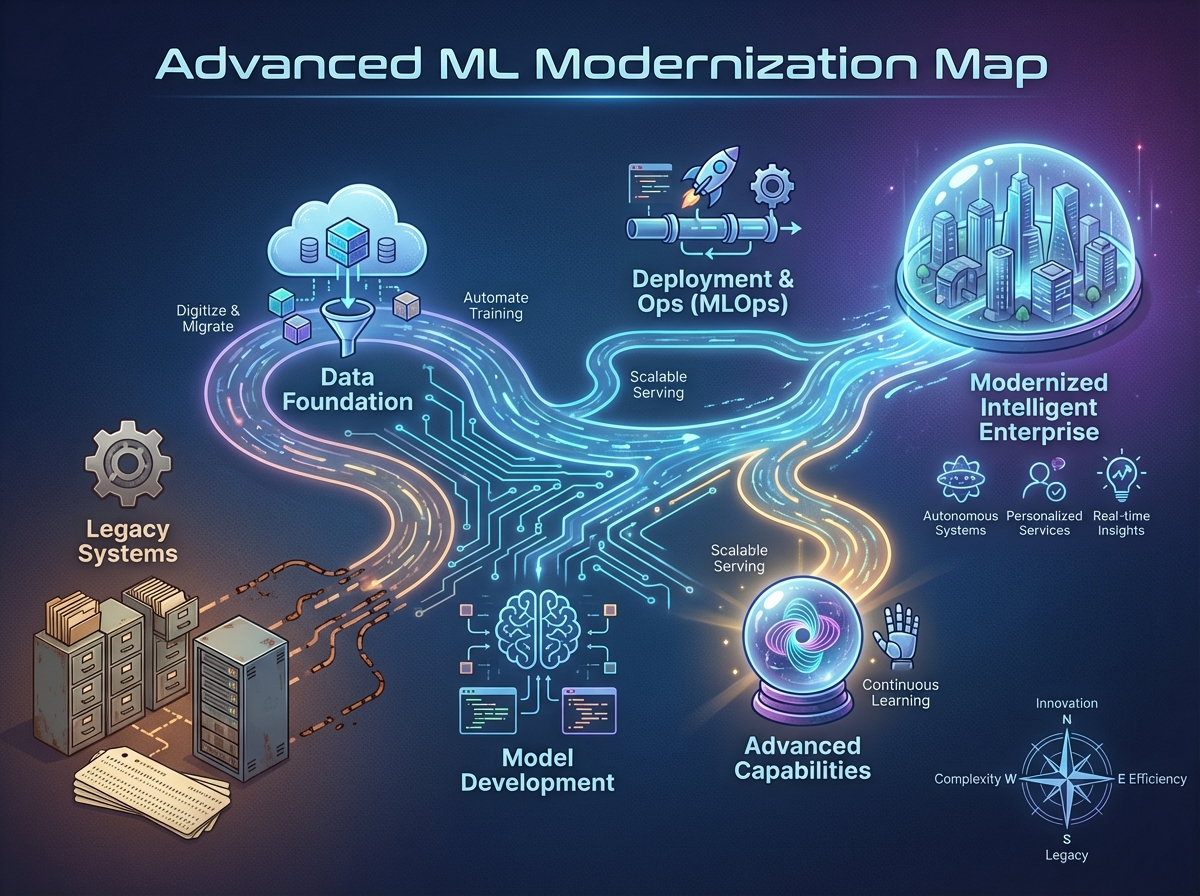
This section maps how classical ML practice has evolved, clarifying when modern representation learning helps and when well-tuned classical models remain the best choice. You’ll focus on data-regime tradeoffs and the practical risks that matter most in classical ML deployments, especially distribution shift and drift. The section also updates evaluation habits by moving beyond accuracy toward calibration and uncertainty-aware decision-making.
Learning Objectives
-
Distinguish feature engineering vs. representation learning and identify when each approach is appropriate in classical ML settings.
-
Analyze data-regime tradeoffs to justify when classical models can outperform modern alternatives.
-
Diagnose key modern ML failure modes (distribution shift and drift) and select evaluation metrics that capture calibration and uncertainty.
-