

Sorry, this activity is currently hidden
Section outline
-
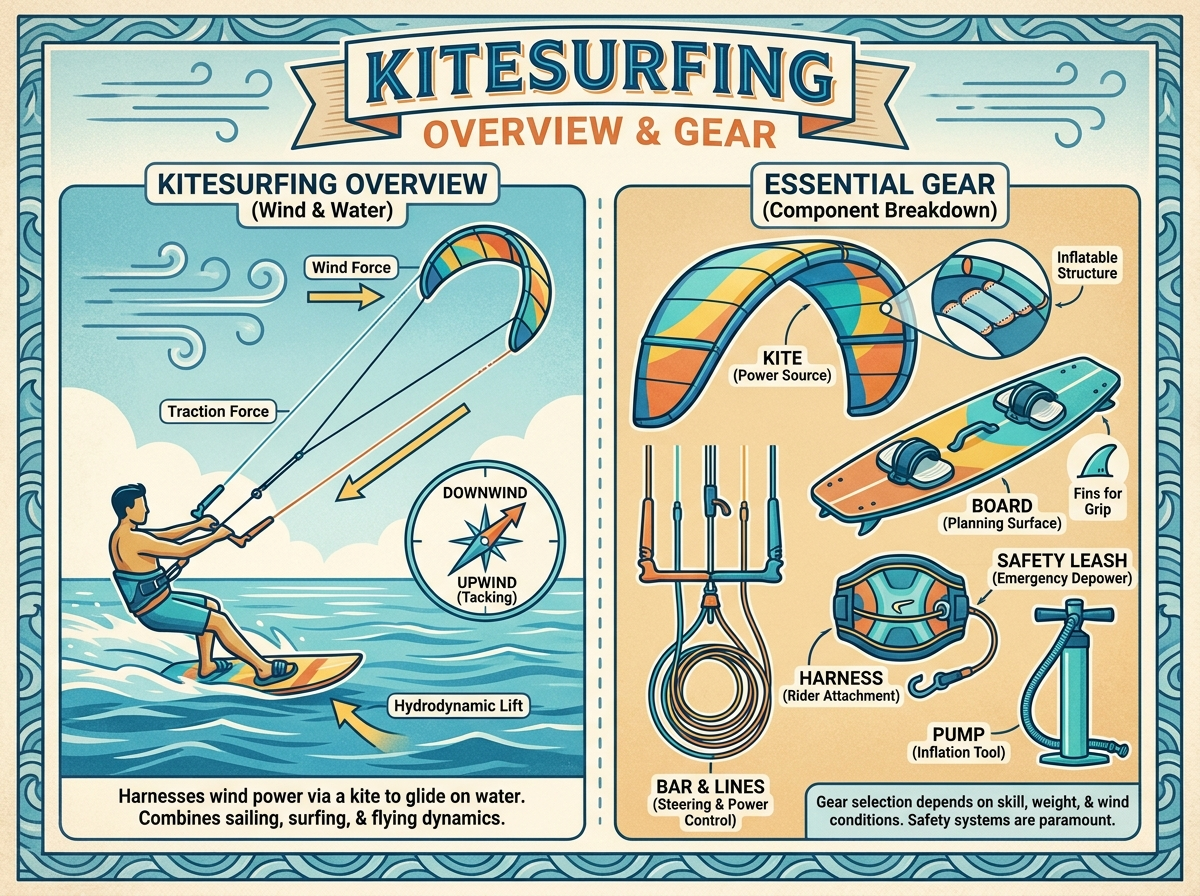
Introduction
This section builds the foundation you need to learn kite performance and steering safely by understanding what kitesurfing is and how the kite generates usable power for a beginner. You’ll identify the core gear and what each part does so you can set up correctly and avoid common safety mistakes. This knowledge also supports smarter weather and “go/no-go” decisions and helps you choose appropriate protective clothing from the start.
Learning Objectives
-
Describe what kitesurfing is and what “performance” means for beginners in terms of controllable power.
-
Identify the main equipment components and explain each one’s basic function and safety role.
-
Recognize beginner-friendly kite types and the high-level setup concepts and terminology needed to prepare safely.
-
-
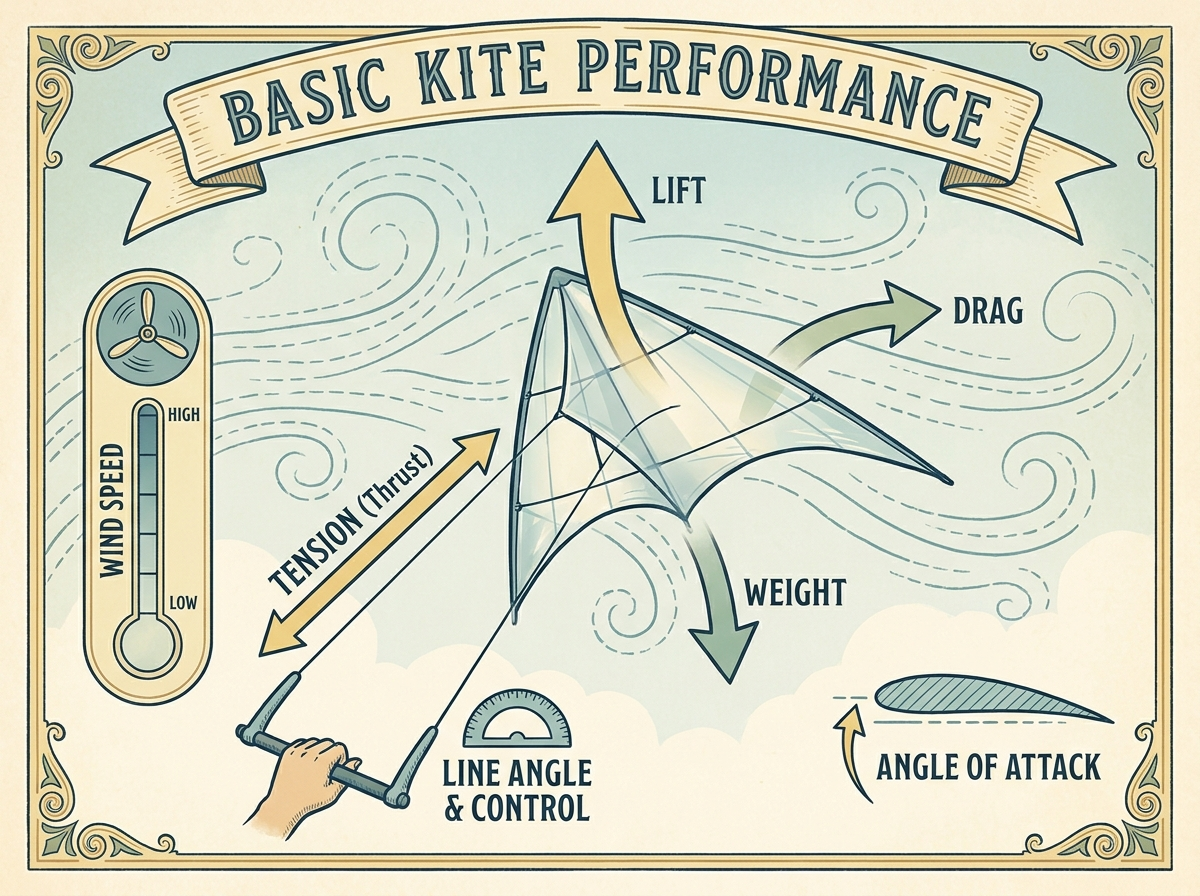
Introduction
In this section you’ll learn how and why a kite generates pull, and how to manage that power as a beginner. Understanding the wind window, power zones, and basic depower controls helps you steer with intention instead of reacting. These fundamentals also support safer decisions in changing weather and reduce the likelihood of dangerous power spikes. The concepts here connect directly to safe progression, equipment handling, and control habits that support later riding.
Learning Objectives
-
Identify the wind window and power zones and predict how kite position changes pull.
-
Explain, at a beginner level, how apparent wind and speed affect kite power and stability.
-
Use basic depower/trim concepts (sheeting and trim strap) to reduce overpowering and prevent common performance issues.
-
-
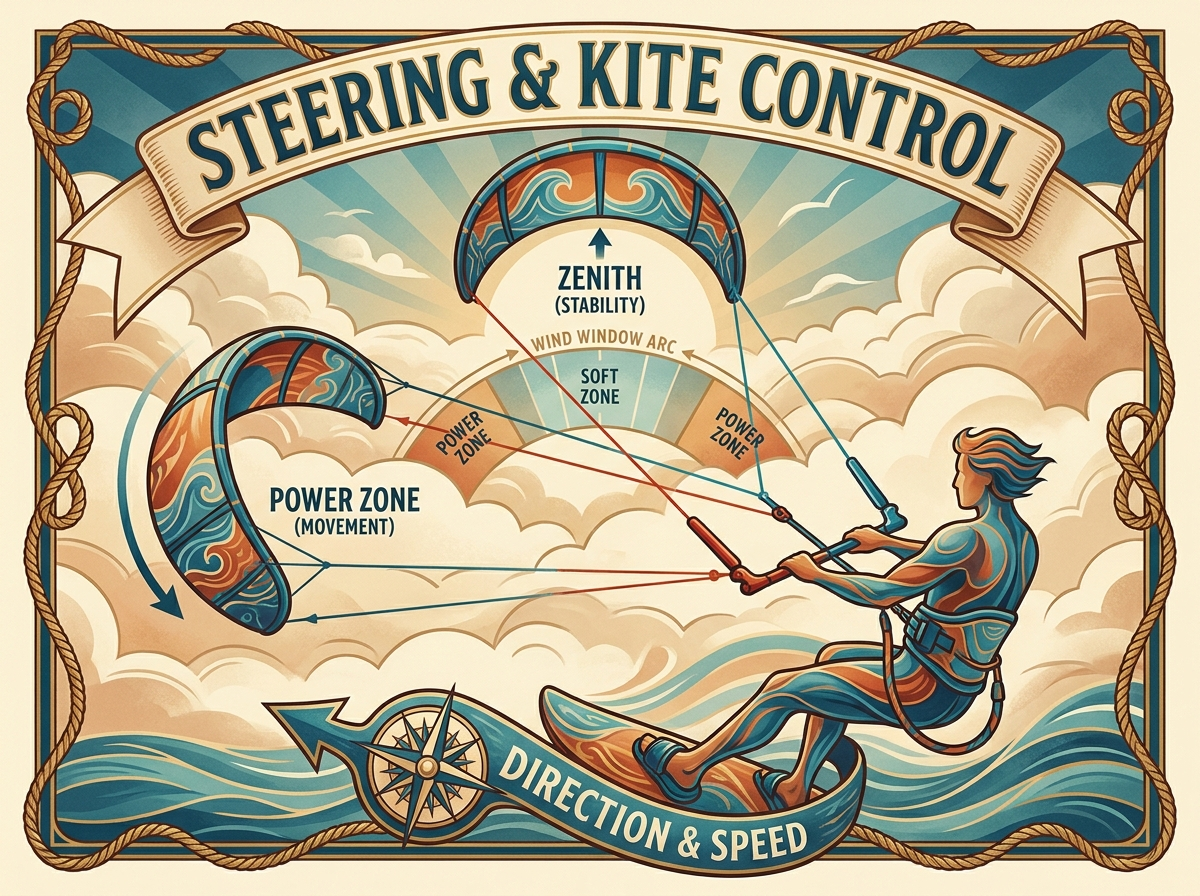
Introduction
In this section, beginners learn how to control the kite smoothly and predictably—critical for turning basic kite performance into safe, repeatable movement. Steering skill reduces accidental power spikes and helps you keep stable positions in changing weather and water conditions. These fundamentals also support safer communication and decision-making alongside standard safety regulations and appropriate protective gear use.
Learning Objectives
-
Demonstrate correct bar inputs for controlled left/right steering and turn sizing.
-
Maintain safe parking and “ready” kite positions to minimize unintended power.
-
Execute smooth, controlled movement patterns (e.g., basic figure-eight) while managing line tension and body position.
-
-
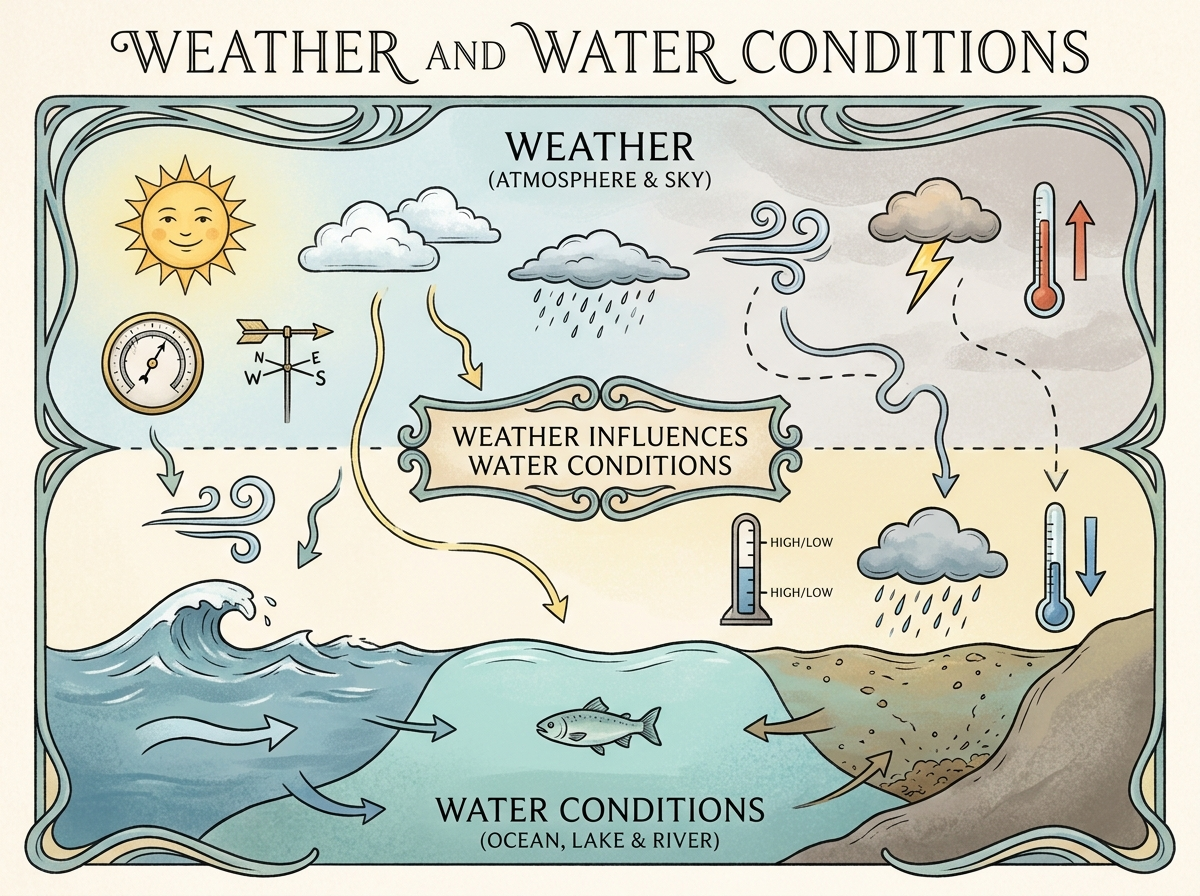
Introduction
Understanding weather and water conditions is essential for safe, beginner-friendly kitesurfing because wind quality and spot hazards directly affect kite performance and steering control. This section helps you make conservative decisions that align with safety regulations and reduce the risk of being overpowered. You’ll learn how to interpret basic forecasts and on-site conditions so you can choose appropriate sessions and dress/protect yourself for exposure.
Learning Objectives
-
Identify safe wind directions and qualities (steady vs gusty) and explain why they matter for kite control.
-
Assess a spot for launch/landing space, hazards, and downwind buffer to support safe beginner practice.
-
Use forecasts and on-site cues to make a conservative go/no-go decision for a session.
-
-
Introduction
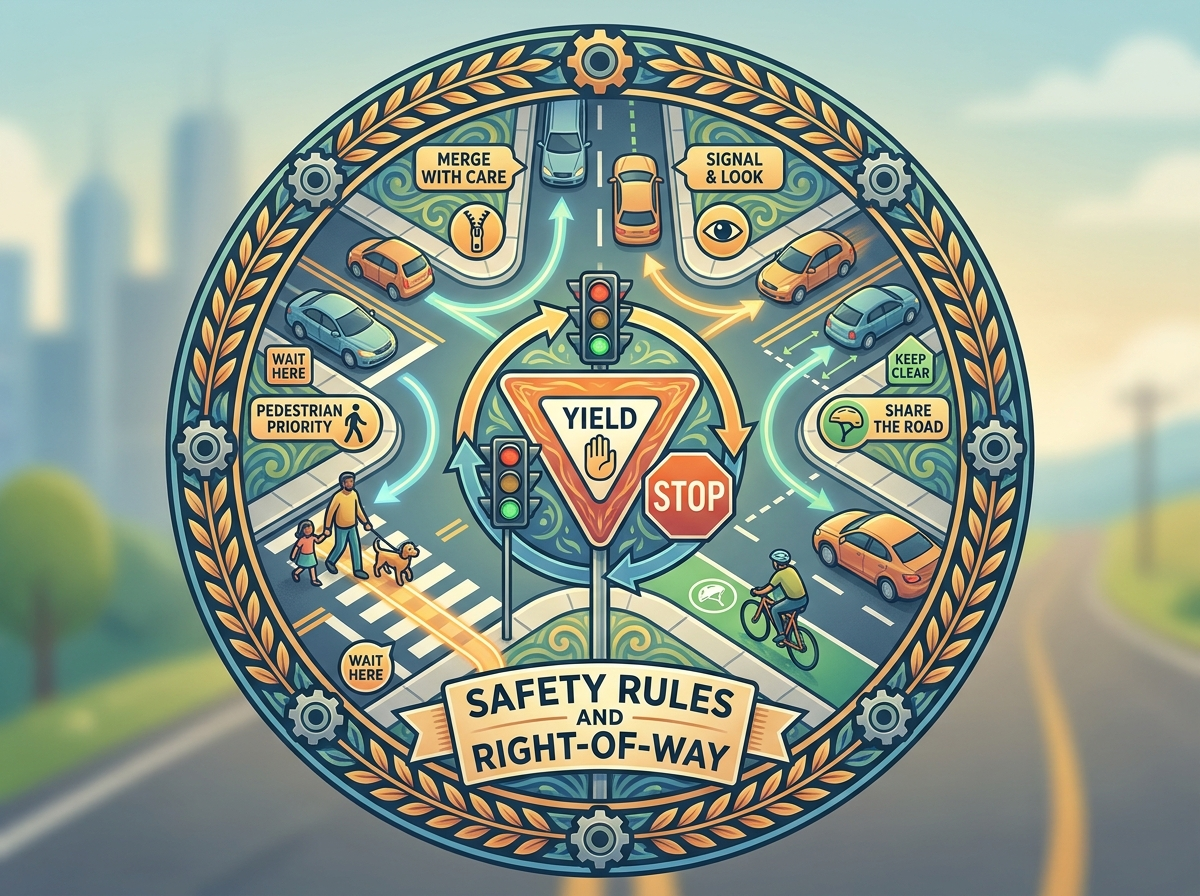
Safety and right-of-way rules are what keep beginner kitesurfing predictable and controlled, especially when kite power, steering inputs, and changing weather interact. This section focuses on practical decision rules for launches/landings and on-water spacing to prevent avoidable incidents. You’ll also connect emergency systems and local regulations to real “what do I do now?” situations, including how gear choices (e.g., leash and harness setup) affect safety.
Learning Objectives
-
Identify and apply core safety principles to break the “risk chain” before incidents develop.
-
Execute clear, beginner-appropriate launch/landing and spacing decisions that reduce collision and entanglement risk.
-
Explain when and how to use quick release and leash systems, and follow basic right-of-way and local etiquette rules.
-
-
Introduction
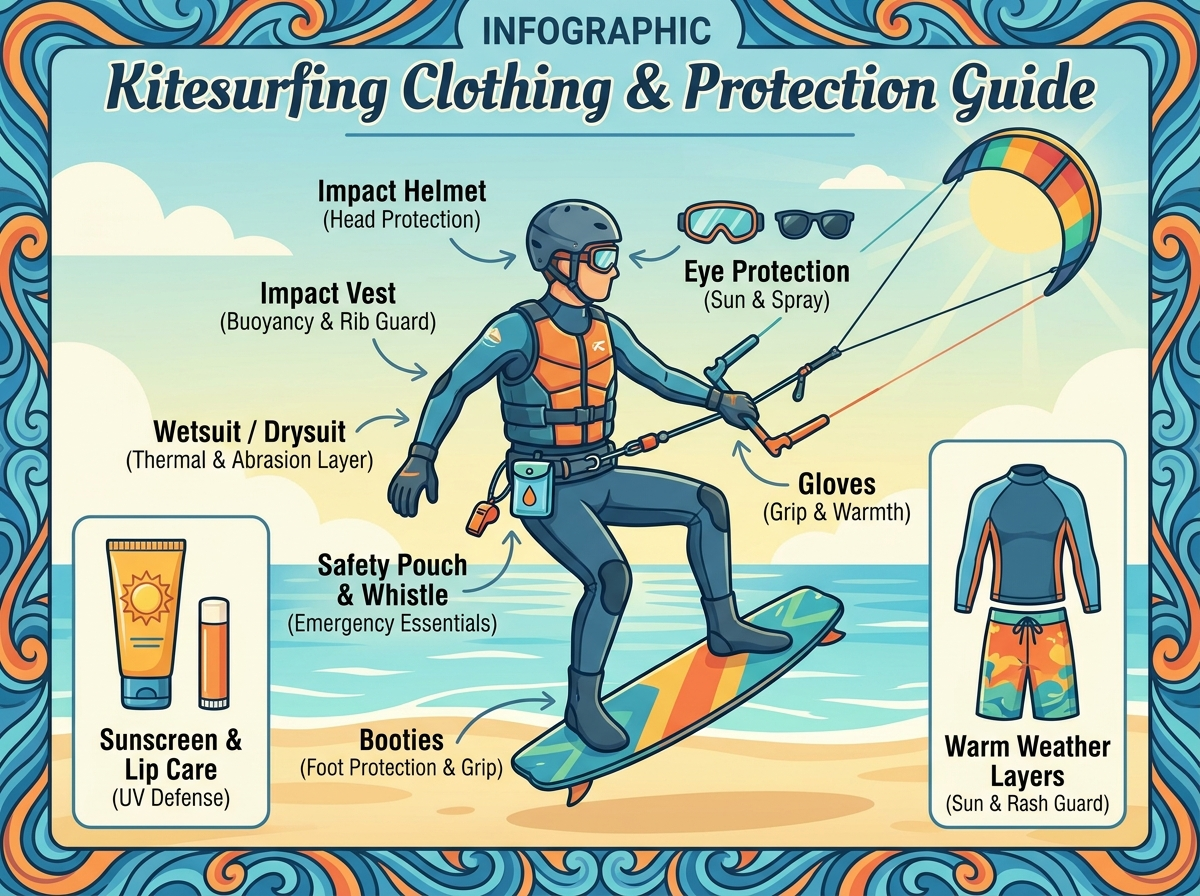
The right clothing and protective gear help beginners stay warm, comfortable, and safe so they can focus on basic kite performance and clean steering. Understanding thermal protection and fit also supports better judgment in changing weather and water conditions. This section connects directly to safety regulations by emphasizing protective choices that reduce risk and improve control.
Learning Objectives
-
Select appropriate thermal protection based on water temperature, air temperature, and wind chill.
-
Choose and correctly use key protective items (helmet, impact vest, exposure protection) for beginner conditions.
-
Identify basic harness fit options and comfort/safety considerations for reliable control.
-
-

Introduction
This final section consolidates the beginner essentials so you can connect gear, kite performance, steering inputs, weather decisions, safety rules, and protective clothing into one coherent routine. You’ll use this recap to identify weak spots, build a safer “go/no-go” habit, and leave with a clear next-step learning plan. The goal is confidence through structured review—not adding new complexity.
Learning Objectives
-
Summarize the core beginner concepts across gear, performance, steering, weather, safety, and clothing.
-
Apply a simple end-to-end pre-session mental checklist to support safer decision-making.
-
Identify personal next steps for continued progression and practice priorities.
-