

Advanced Techniques in Energy Efficiency
Advanced Techniques in Energy Efficiency
Enhancing Energy Efficiency in the B2B Energy Sector
In the ever-evolving energy sector, businesses today face mounting pressure to optimize energy usage while minimizing environmental impact. Energy Management Systems (EMS) play a crucial role in addressing these challenges by providing a structured approach to energy efficiency. In this lesson, we delve into advanced techniques in energy efficiency, equipping you with the knowledge and tools required to make informed decisions and implement effective strategies within your organization. Understanding these techniques is essential for maintaining competitiveness and sustainability in the B2B energy landscape.
Key Concepts in Advanced Energy Efficiency
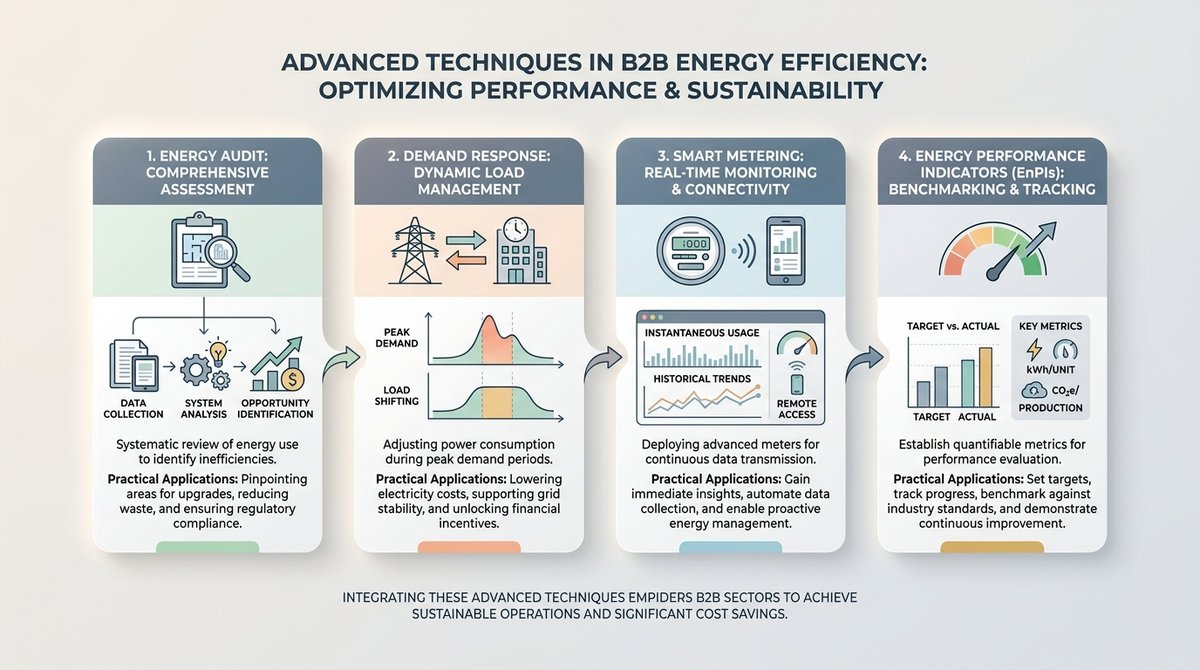
To effectively implement advanced energy efficiency techniques, it's essential to grasp several foundational concepts.
-
Energy Audit: An analytical process to understand and optimize energy use, identifying energy savings opportunities.
-
Demand Response: Adjusting power consumption patterns in response to supply conditions, often incentivized by pricing signals or directives from grid operators.
-
Smart Metering: A technology that enables real-time monitoring of energy consumption, providing detailed data for better decision-making.
-
Energy Performance Indicators (EnPIs): Metrics used to assess energy performance, such as energy consumption per unit of production.
These elements constitute the backbone of developing and implementing advanced energy efficiency strategies. They foster a culture of continuous improvement and data-driven decision-making, imperative in the energy sector.
Practical Techniques for Energy Efficiency
[1] Conducting Comprehensive Energy Audits
A thorough energy audit is vital in identifying where energy is consumed and where savings can be achieved. The process usually involves:
- Preliminary Audit: A brief assessment aimed at identifying major energy-saving opportunities.
- Detailed Audit: Includes a comprehensive analysis of energy flows, which might require temporary monitoring of energy consumption.
- Investment-Grade Audit: Provides a detailed financial analysis to justify significant capital investments in energy-saving projects.
An effective audit combines both onsite evaluations and detailed data analysis, enabling tailored energy efficiency strategies that align with an organization’s specific needs.
[2] Leveraging Demand Response Programs
Demand response programs offer significant opportunities for energy savings. By participating, businesses can:
-
Reduce Peak Demand: By shifting or reducing power use during peak periods, often leading to lower electricity bills.
-
Enhance Grid Stability: Assisting in balancing supply and demand, and thereby ensuring a reliable energy supply.
These programs often come with financial incentives, motivating participation and fostering energy efficiency during critical periods.
[3] Using Smart Metering for Optimal Efficiency
Smart meters provide real-time data on energy consumption, which facilitates:
-
Enhanced Energy Monitoring: Allowing businesses to track and optimize energy usage patterns in real time.
-
Cost Savings: By identifying patterns and inefficiencies, organizations can implement measures to reduce energy waste.
-
Improved Resource Allocation: Enabling informed decision-making regarding energy investments and operational changes.
Smart metering creates a feedback loop that drives continuous improvement in energy management practices.
[4] Implementing Energy Performance Indicators (EnPIs)
EnPIs are essential for evaluating and improving energy performance. They should be:
-
Specific and Measurable: Tailored to reflect the unique energy demands and goals of a business.
-
Relevant and Actionable: Providing insights that directly inform energy optimization strategies.
By regularly tracking EnPIs, organizations can better measure improvements and adjust strategies as needed.
Real-World Applications in the Energy Sector
[Example 1: Manufacturing Facility]
A large manufacturing facility implemented a comprehensive energy audit, revealing significant energy savings opportunities in their HVAC and lighting systems. By upgrading to energy-efficient lighting and optimizing HVAC controls, the facility reduced its energy consumption by 15%.
-
Impact: Lower operational costs and reduced environmental footprint.
-
Benefits: Enhanced reputation among environmentally-conscious clients and stakeholders.
-
Limitations: Initial investment costs and the time required for complete system implementation.
This example illustrates how a targeted approach, grounded in a thorough understanding of energy use, leads to effective energy management.
[Example 2: Data Center Operations]
A data center engaged in a demand response program with its utility provider, receiving financial incentives for reducing power use during peak periods. By adjusting server loads and utilizing energy storage solutions, the data center achieved a 10% reduction in energy costs during high-demand events.
-
Impact: Significant cost savings and enhanced operational resilience.
-
Benefits: Improved energy efficiency and competitive advantage.
-
Limitations: Potential disruptions in service quality and the need for robust contingency planning.
Demand response participation demonstrates the potential for operational flexibility and financial gain from advanced energy management strategies.
Advanced Energy Strategies in Context
Energy efficiency is not a standalone goal, but an integral component of a broader energy management strategy. By integrating these advanced techniques into the energy management plan, businesses can achieve substantial energy savings, optimized operations, and greater sustainability. Continuous monitoring, data interpretation, and adaptable strategies form the backbone of successful energy management, allowing organizations to thrive in an increasingly competitive energy landscape.
Next, we'll build on this by exploring Role of Automation and IoT in EMS.