

Sorry, this activity is currently hidden
Section outline
-
Introduction
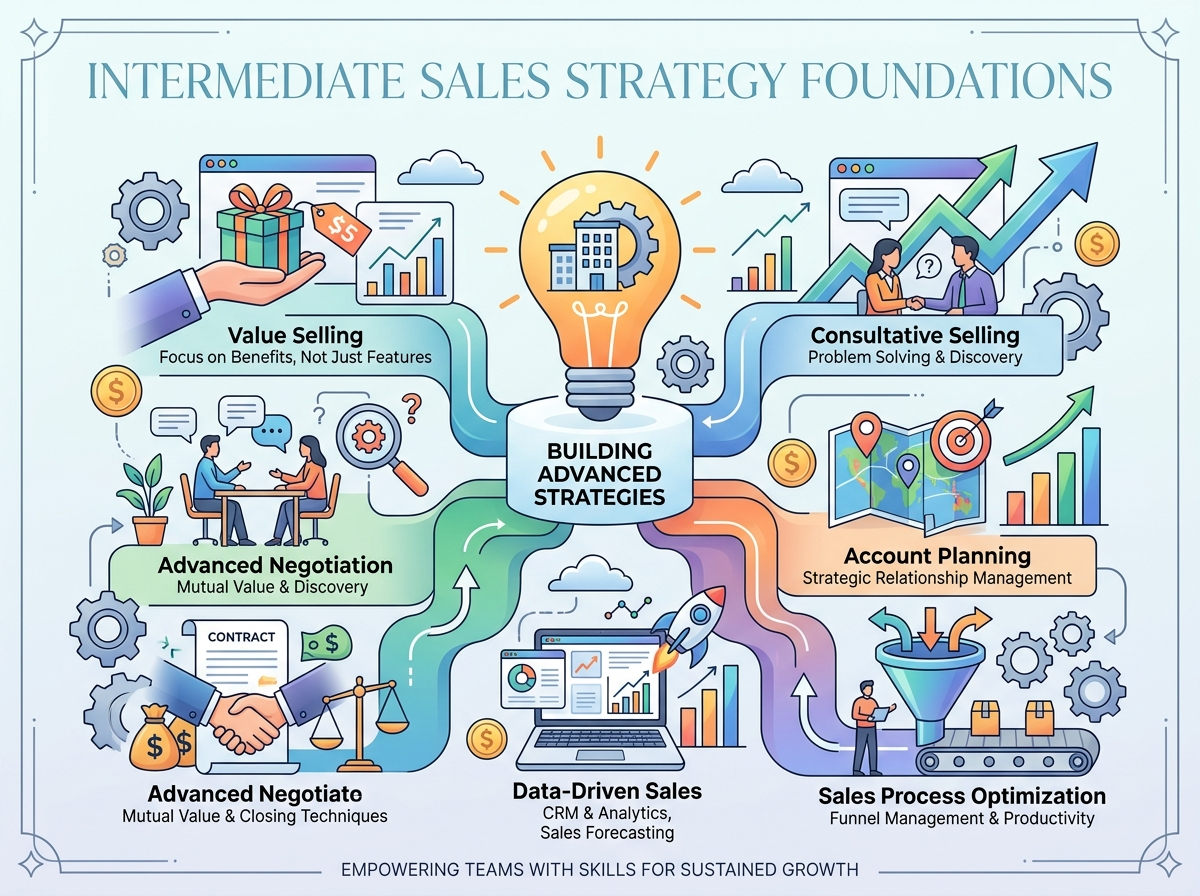
This section reframes sales as a repeatable revenue system so founders and sales teams can stop relying on heroics and start managing performance. You’ll align the right sales motion to your context, clarify who really buys, and sharpen value creation over feature pitching. By the end, you’ll have practical targets and guardrails to avoid common intermediate scaling mistakes.
Learning Objectives
-
Define sales as a system using pipeline, conversion, velocity, and retention to diagnose performance.
-
Select an appropriate sales motion (founder-led, team-led, or hybrid) based on your stage and constraints.
-
Identify key buyer roles and apply outcome-based value framing to reduce messaging and qualification mistakes.
-
-
Introduction
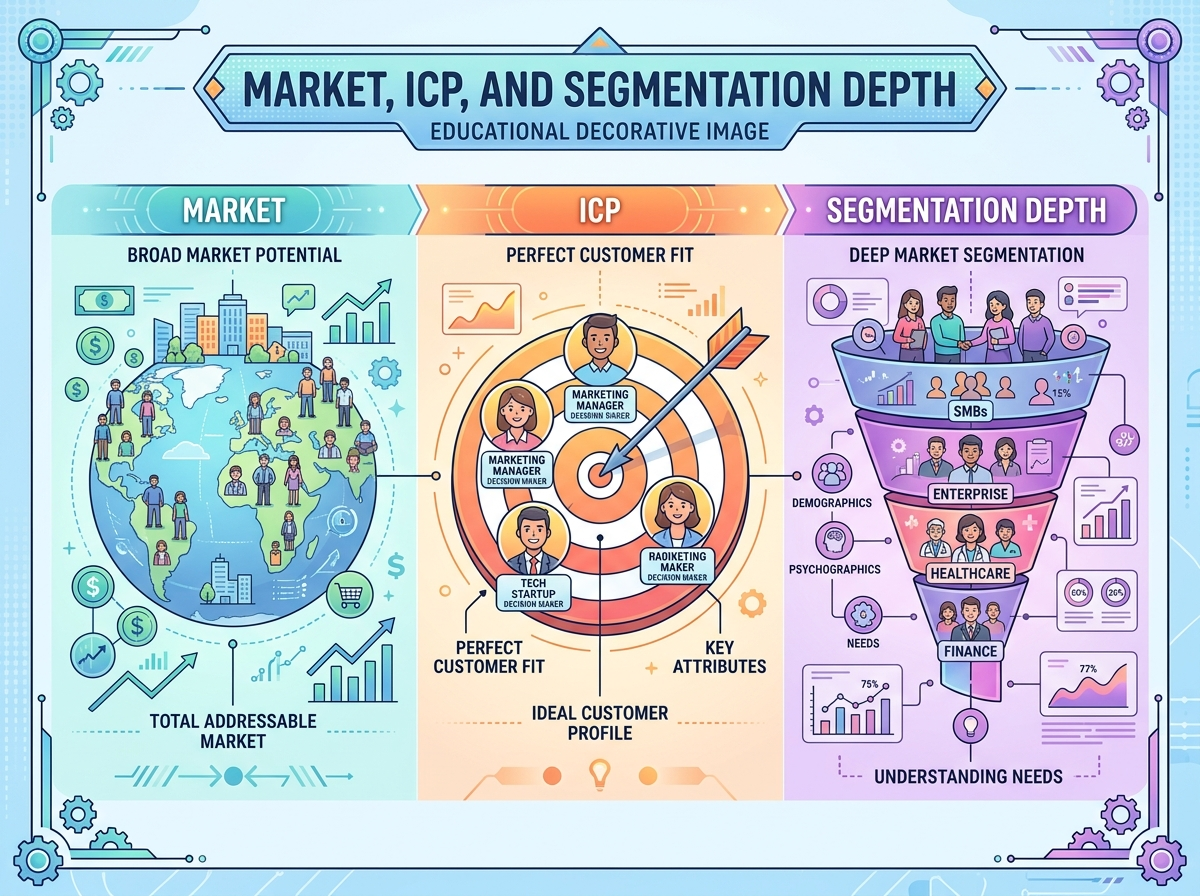
This section helps founders and sales teams move from “anyone who might buy” to a focused, evidence-based targeting approach. You’ll learn how to segment markets precisely, deepen your ICP, and spot high-intent timing signals so pipeline effort goes to the right accounts. The outcome is clearer prioritization, sharper positioning assumptions, and fewer wasted cycles on low-fit opportunities.
Learning Objectives
-
Build a practical segmentation model using firmographic and trigger-based criteria.
-
Define a deeper ICP that accounts for workflows, constraints, and buying realities.
-
Prioritize segments and accounts using intent signals, competitive context, and sequencing tradeoffs.
-
-
Introduction
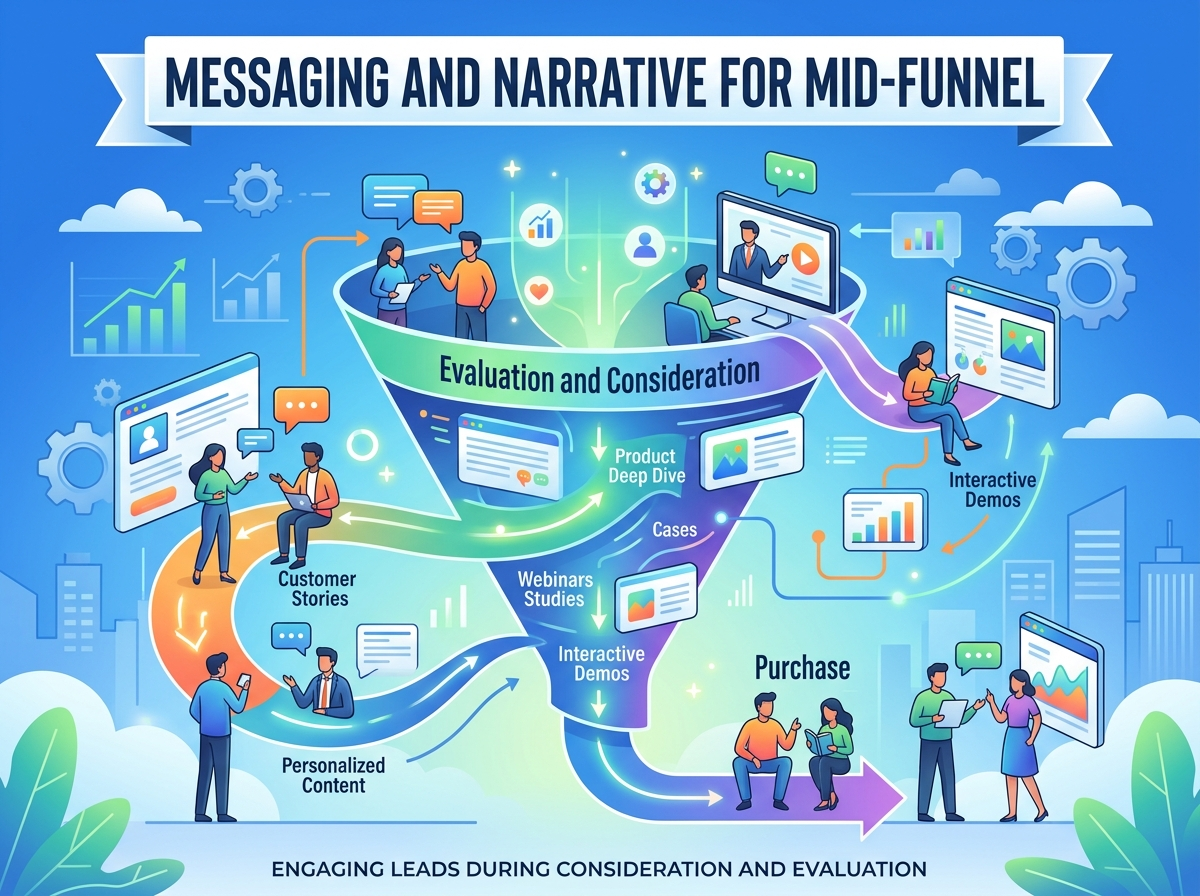
Mid-funnel messaging is where deals slow down or accelerate based on clarity, credibility, and consistency. In this section, you’ll build a narrative that translates what you sell into outcomes buyers care about, while addressing skepticism before it becomes objection. This is especially critical for sales teams and founders who need repeatable talk tracks and assets that hold up across stakeholders and channels.
Learning Objectives
-
Build a value proposition hierarchy that connects a clear headline to proof and specificity.
-
Translate product capabilities into customer outcomes using jobs-to-be-done language.
-
Strengthen credibility by applying social proof and risk-reversal to common skepticism.
-
-
Introduction
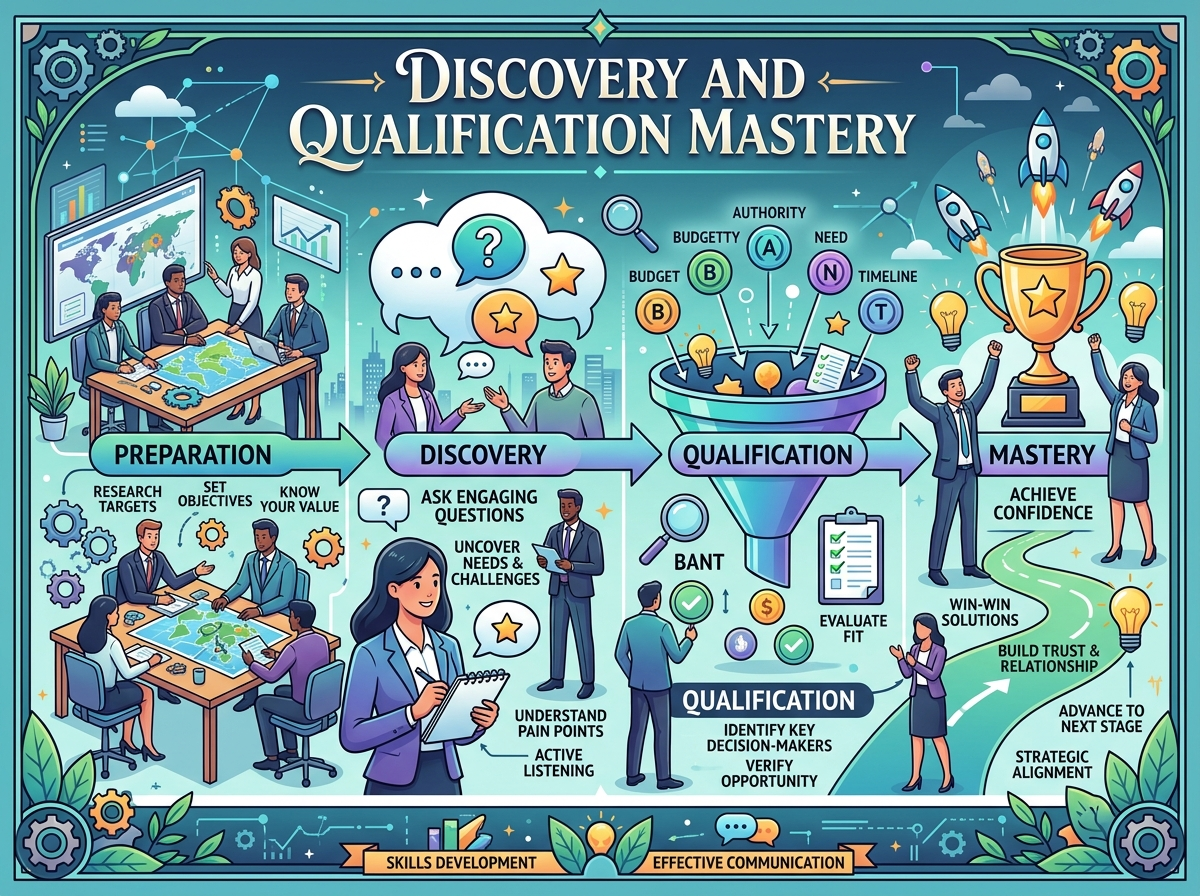
Strong discovery turns selling from persuasion into diagnosis, making deals easier to advance and harder to lose. In this section, sales teams and founders learn how to uncover real impact, urgency, and decision dynamics so qualification is accurate and next steps are mutual. The goal is more forecastable pipeline by surfacing risk early and documenting what matters.
Learning Objectives
-
Run advanced discovery that clarifies impact, urgency, and decision dynamics in one conversation.
-
Qualify opportunities beyond fit by assessing intent, process clarity, and mutual commitments.
-
Map buying committees to identify influence paths, hidden vetoes, and deal risk early.
-
-
Introduction
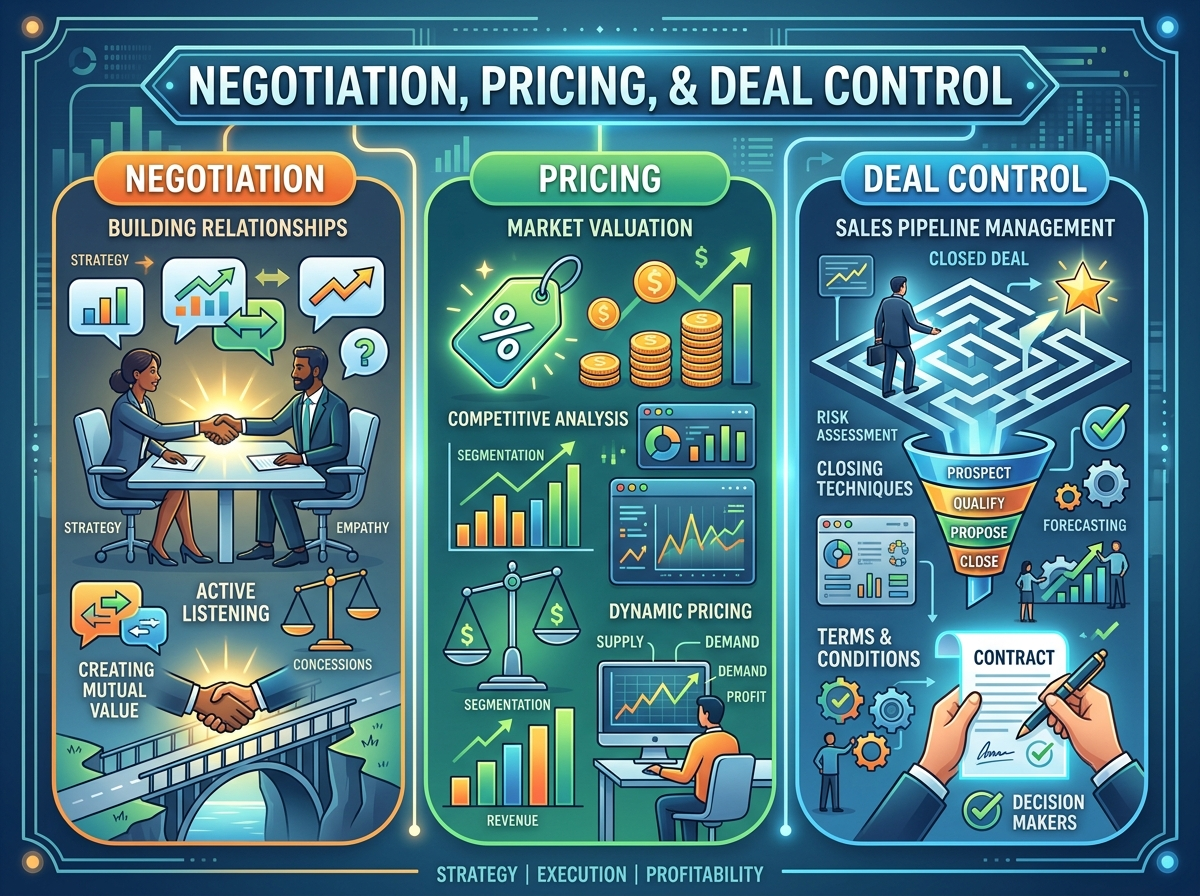
This section equips sales teams and founders to keep deals on track when pricing pressure, procurement, and timeline drift show up. You’ll learn how to anchor on value, negotiate without eroding trust or margin, and create decision clarity to control the close. The focus is on practical deal control moves that reduce risk and prevent “surprise” stalls late in the cycle.
Learning Objectives
-
Lead pricing conversations by anchoring on value outcomes and risk reduction rather than features or cost.
-
Apply negotiation principles to make concessions strategically while protecting deal integrity.
-
Manage late-stage friction (procurement/legal, discounting, and close planning) to improve close rates and reduce post-signature churn risk.
-
-
Introduction
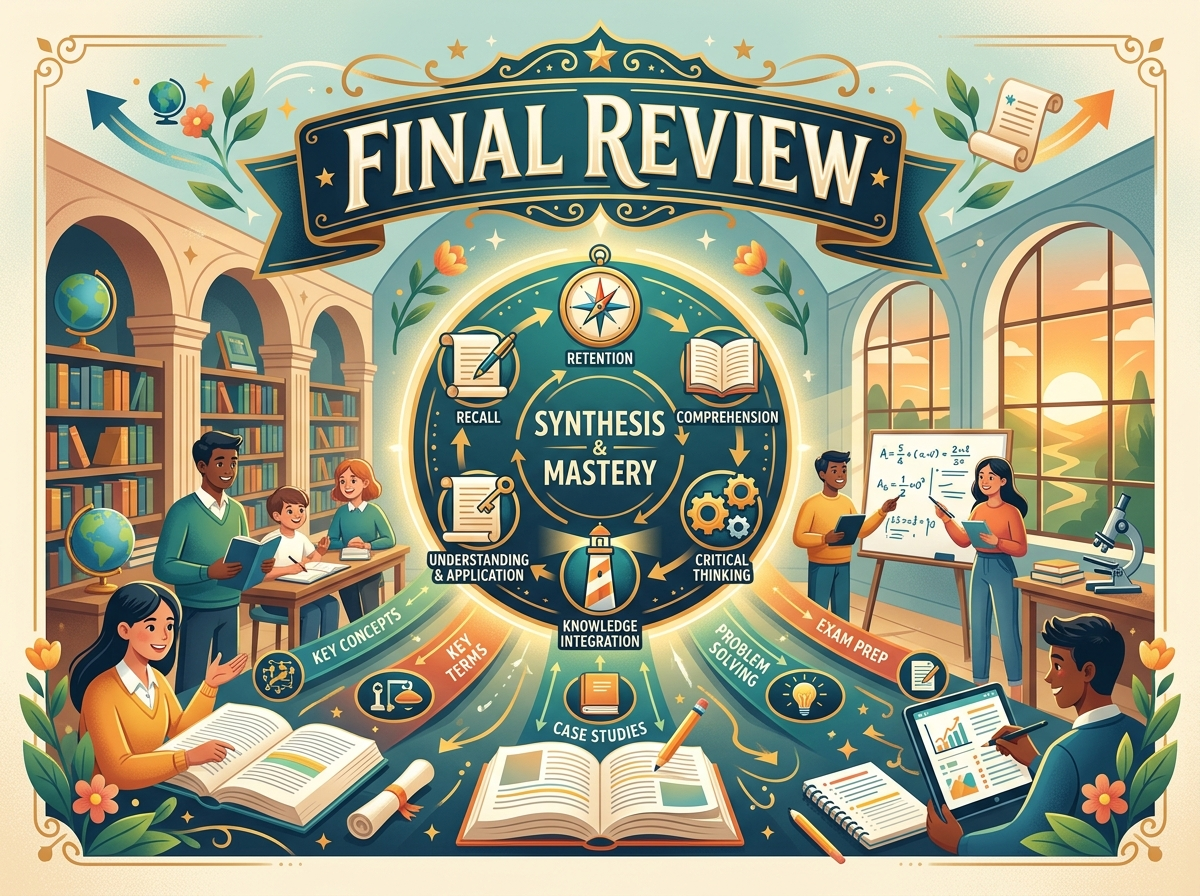
This final section consolidates the practical systems and decisions that make intermediate sales repeatable, not heroic. Sales teams and founders will use it to connect strategy, ICP, messaging, discovery, and deal control into one coherent operating approach. You’ll also identify the highest-leverage next steps for improving consistency and outcomes.
Learning Objectives
-
Summarize the end-to-end sales system and how each section connects to revenue outcomes.
-
Diagnose the most likely bottlenecks in your current sales motion using leading and lagging indicators.
-
Create a focused next-step learning and improvement plan for your role (founder or sales team).
-