

Section outline
-
Introduction
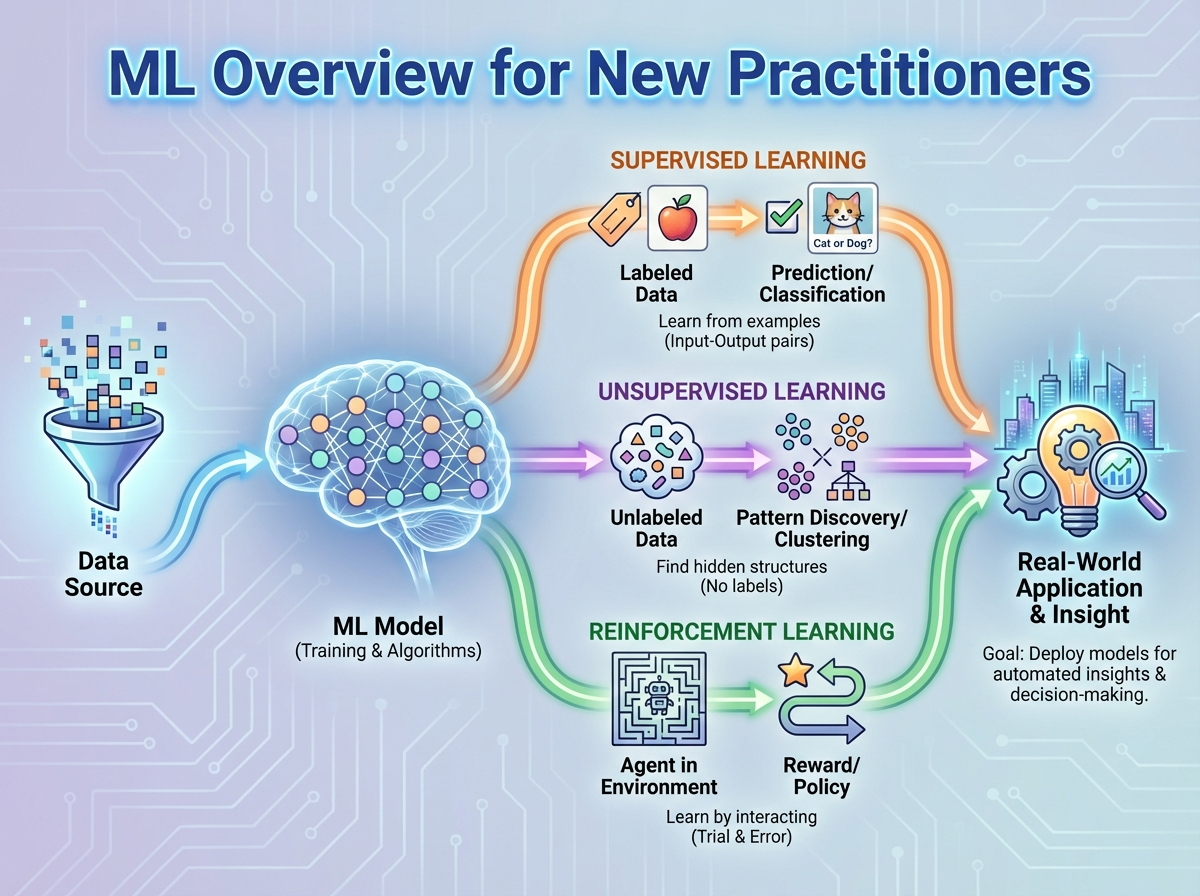
This section introduces what machine learning looks like in practice on real ML teams, including what it can and cannot do. You’ll learn the main problem types and the basic path from raw data to a usable model. This foundation helps you interpret ML work products and collaborate effectively in ML projects.
Learning Objectives
-
Distinguish what ML is and is not in a real-world ML team context.
-
Identify core ML problem types (supervised, unsupervised, RL) and when each is used.
-
Explain how datasets, features, and targets connect to common ML deliverables.
-
-
Introduction
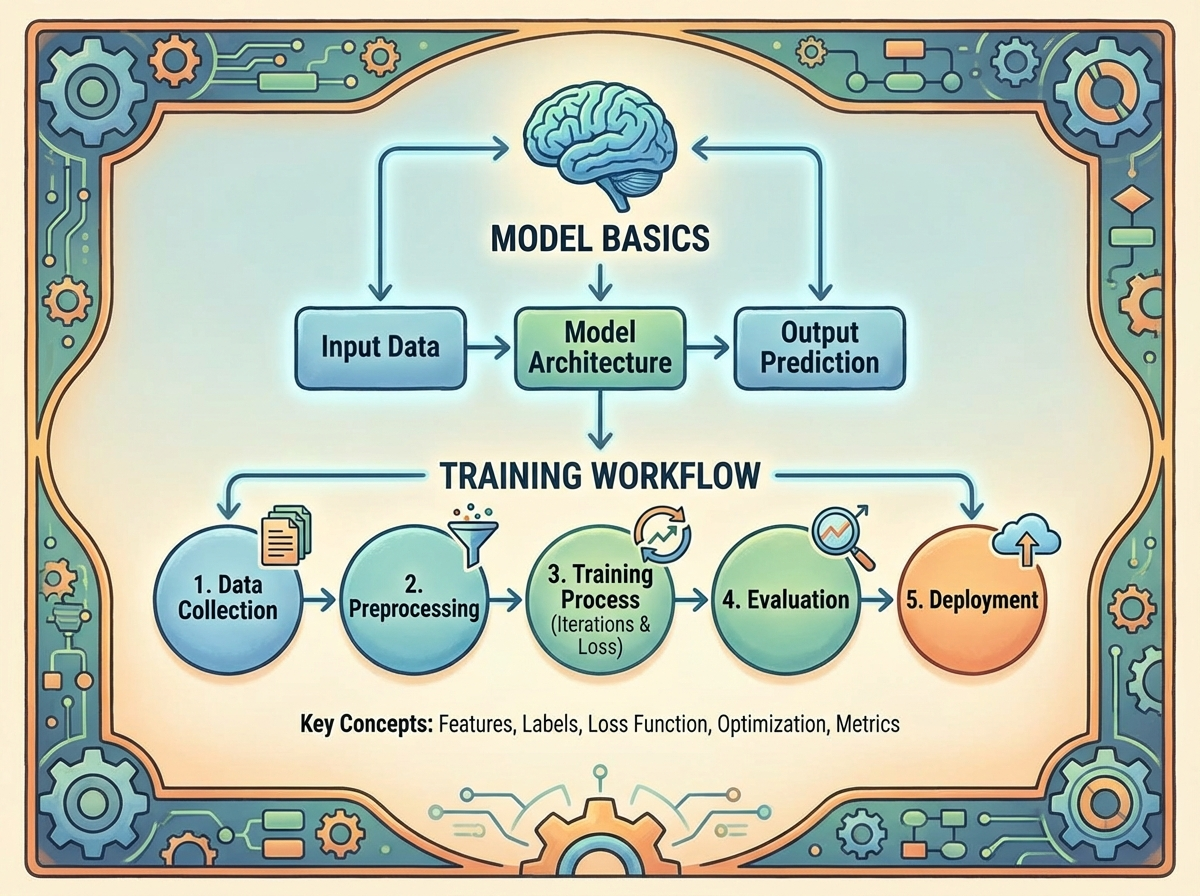
This section explains the core mechanics behind how ML models learn from data and why they succeed or fail in real ML work. You’ll connect foundational ideas like parameters, loss, and optimization to practical workflow steps used in ML teams. By the end, you should be able to reason about training results and common pitfalls like overfitting.
Learning Objectives
-
Explain parameters, learning, generalization, and overfitting in beginner-friendly terms.
-
Describe train/validation/test splits and justify why each split is needed.
-
Identify loss functions, optimization, and common model families at a high level.
-
-

Introduction
This section consolidates the key ML concepts you’ve learned into a coherent mental model you can apply on real ML teams. You’ll connect problem types, data-to-model workflow, and training fundamentals to common ML outcomes and decisions. It also helps you identify clear next steps to keep building practical ML skills.
Learning Objectives
-
Summarize the core ML concepts from Sections 1–2 in a single, connected workflow.
-
Identify appropriate next learning directions based on your current skill gaps and goals.
-
Explain common ML deliverables and when each is used in practice.
-