

Sectieoverzicht
-
Introduction
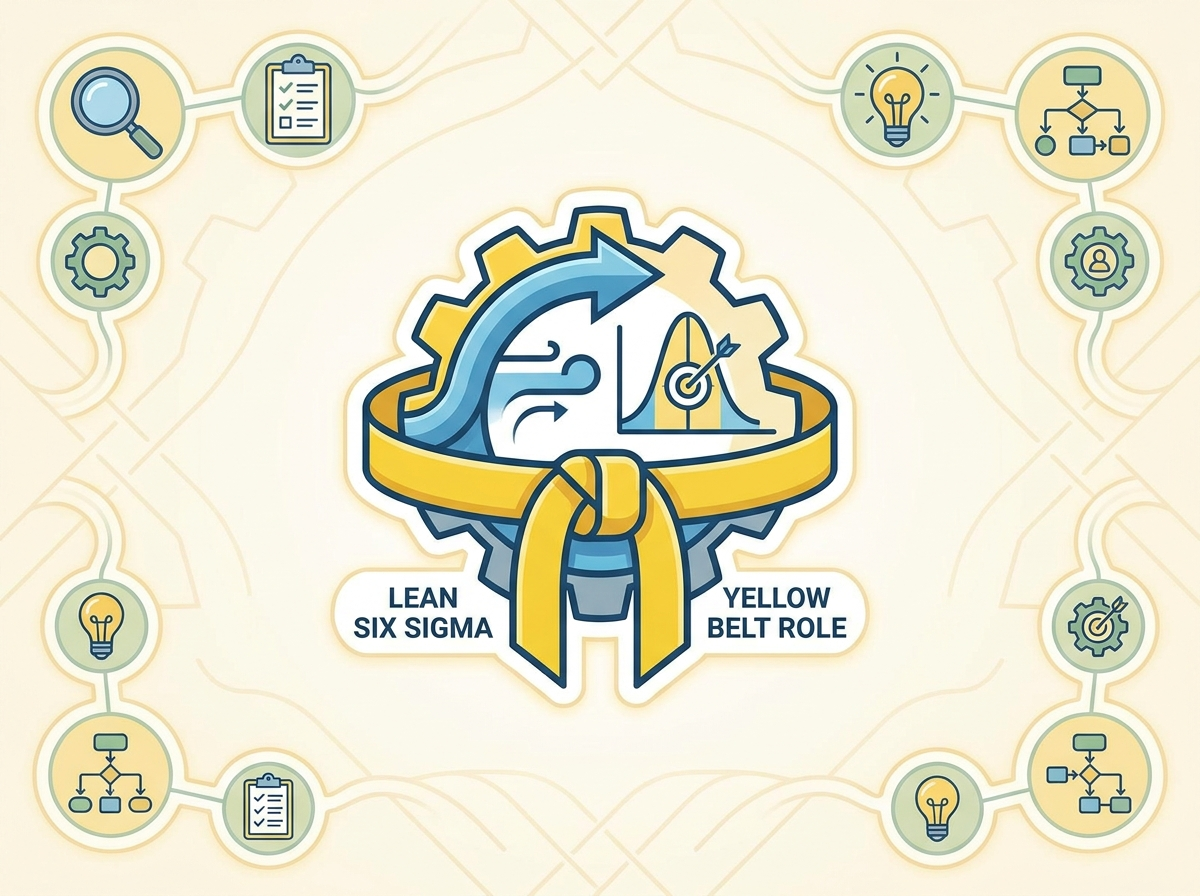
This section introduces what Lean Six Sigma is and why organizations use it to improve customer value, quality, speed, cost, and risk outcomes. You’ll see how Lean and Six Sigma complement each other and where Yellow Belts fit in real improvement work. Establishing shared language and expectations here helps you contribute effectively to projects as a Lean Six Sigma Yellow Belt.
Learning Objectives
-
Explain the purpose and origins of Lean Six Sigma and how Lean and Six Sigma work together.
-
Describe the typical scope, responsibilities, and contributions of a Yellow Belt in improvement projects.
-
Define core Lean Six Sigma terms (e.g., process, waste, defect, variation, CTQ, VOC) and connect improvement work to business outcomes.
-
-
Introduction
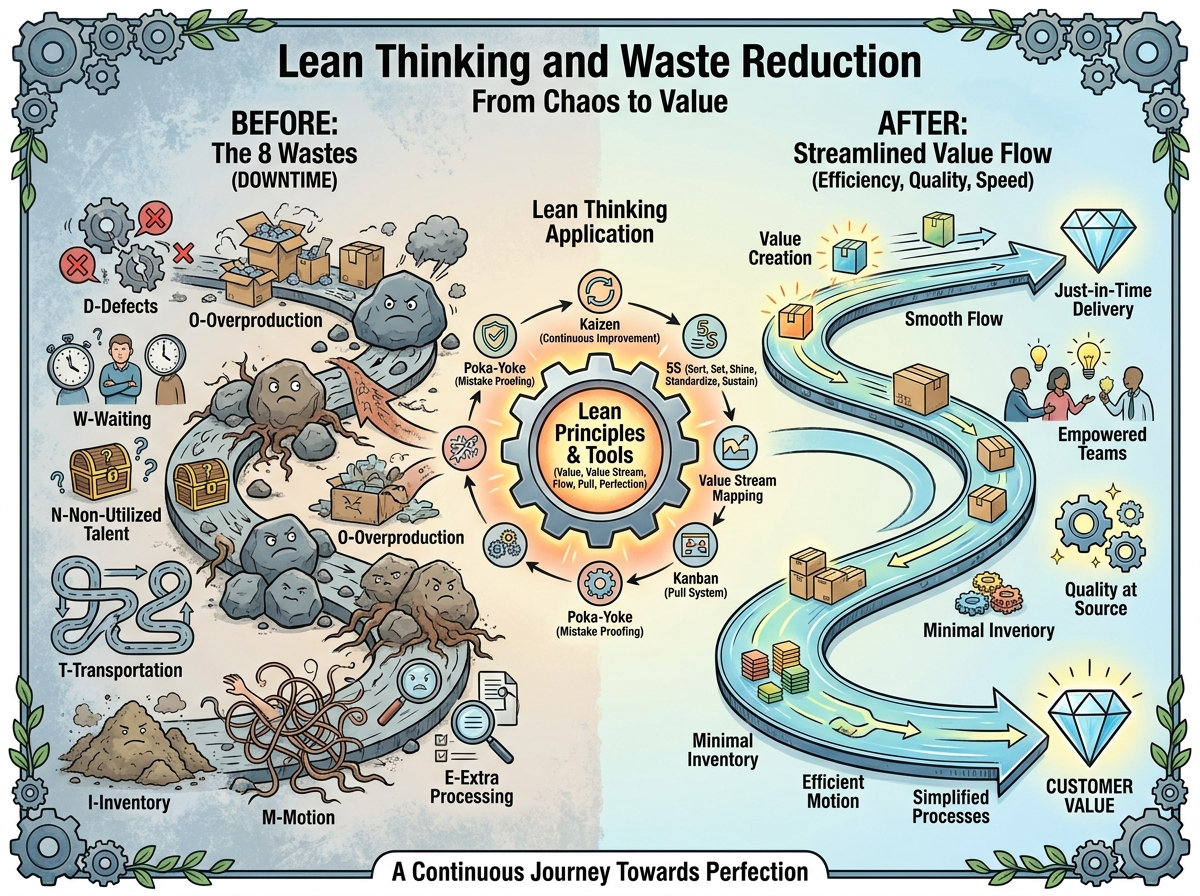
This section builds the Lean foundation Yellow Belts use to spot inefficiencies, improve flow, and reduce delays in everyday work. You’ll learn to see work as an end-to-end value stream and identify waste that drives cost, speed, and quality issues. These skills help Yellow Belts support project teams by providing practical observations and improvement ideas grounded in customer value.
Learning Objectives
-
Identify value from the customer perspective and describe work as a value stream from request to delivery.
-
Recognize and categorize the 8 wastes (DOWNTIME) in office and operational processes.
-
Explain how flow, standard work, and visual management support sustainable continuous improvement.
-
-
Introduction
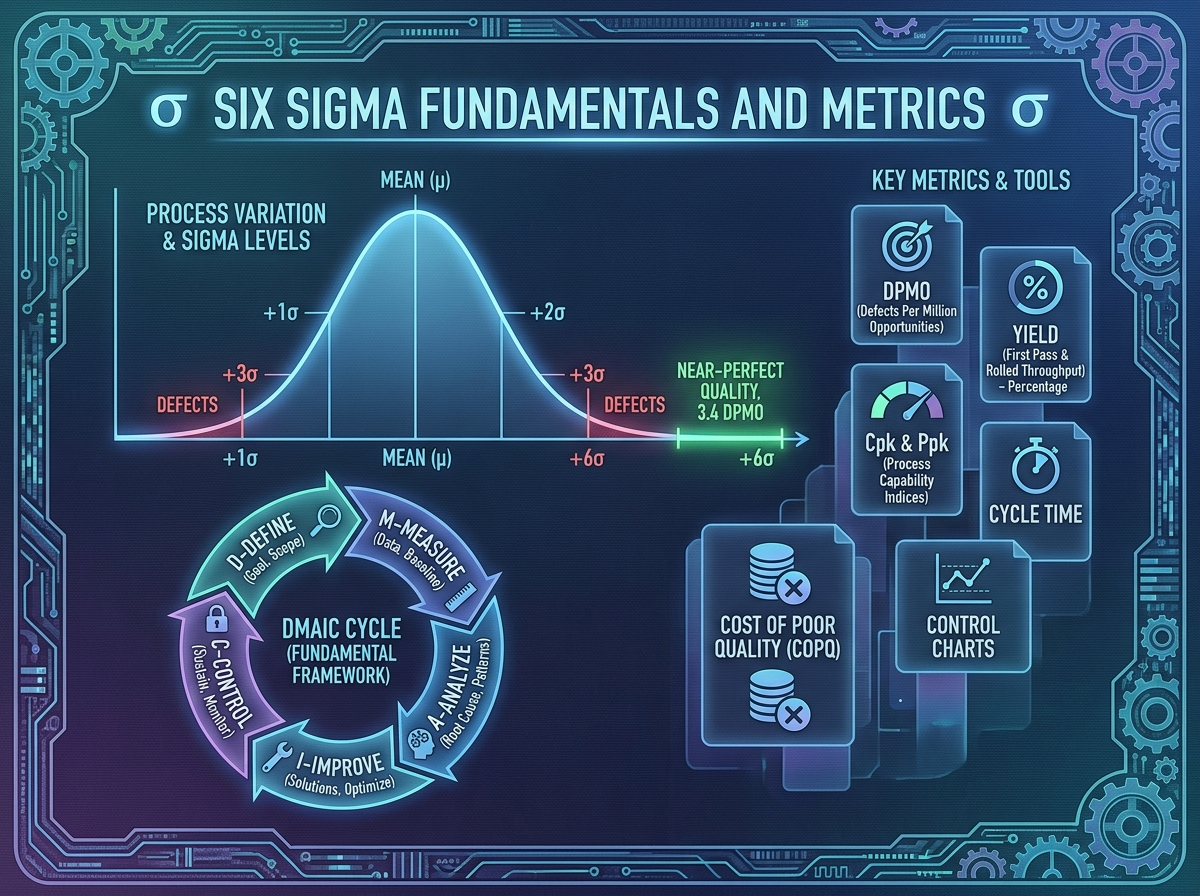
This section builds the core Six Sigma language and measurement mindset Yellow Belts need to support improvement projects. You’ll learn how variation affects performance, how to define defects consistently, and how to translate customer needs into measurable requirements. The focus is on practical concepts that help you collect, interpret, and communicate basic process performance data.
Learning Objectives
-
Distinguish common vs. special cause variation and explain why variation drives defects.
-
Define defects and opportunities clearly using operational definitions to avoid measurement ambiguity.
-
Describe and interpret basic performance measures (yield, DPMO, sigma level) and their practical limitations.
-
-
Introduction
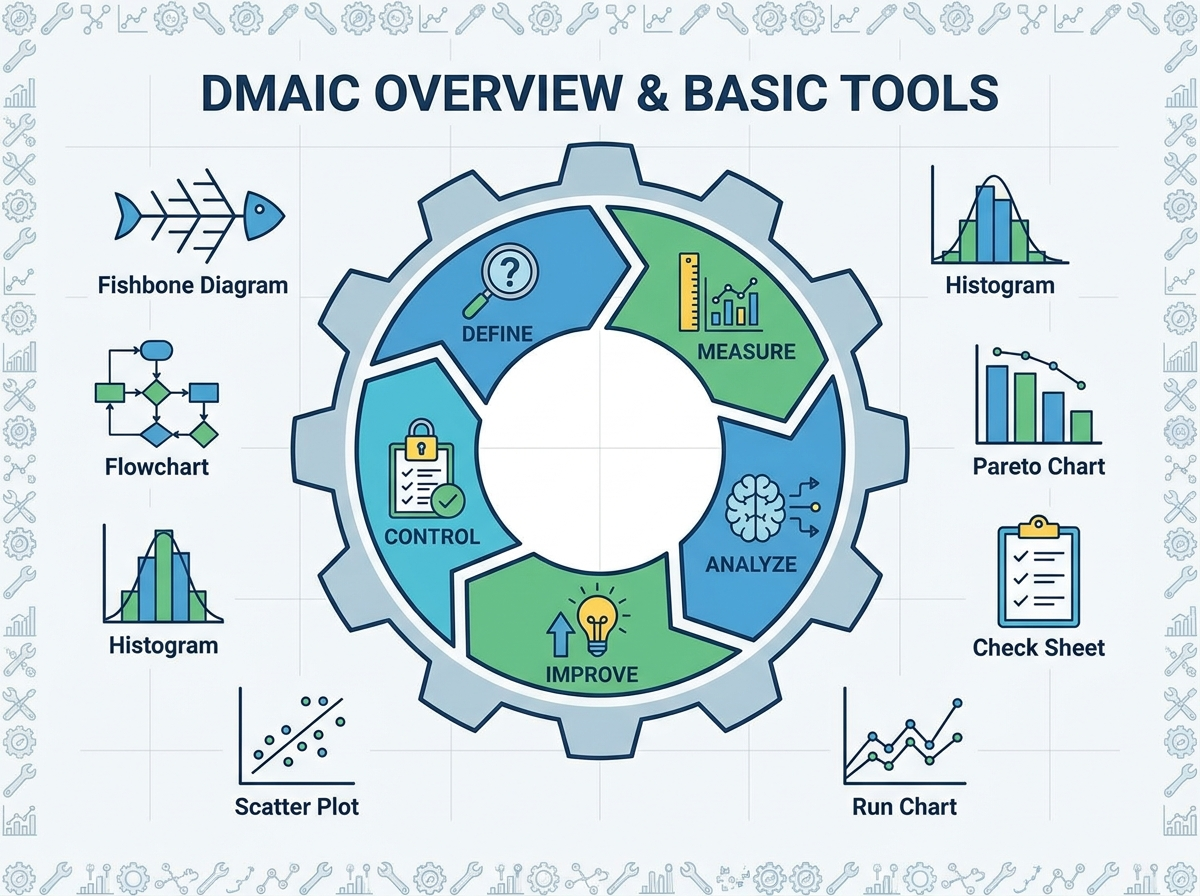
This section introduces DMAIC as the core improvement roadmap used in Lean Six Sigma projects and clarifies how Yellow Belts contribute in each phase. You’ll learn a practical set of basic tools to define problems clearly, measure performance, analyze causes, and support improvements. These tools help Yellow Belts participate effectively on project teams by using shared methods and evidence-based thinking.
Learning Objectives
-
Explain the purpose of each DMAIC phase and identify typical Yellow Belt contributions in each.
-
Apply core Define and Measure tools to frame a problem and plan simple data collection.
-
Use basic Analyze, Improve, and Control concepts to support root-cause thinking and sustain gains.
-
-
Introduction
This section consolidates the Lean Six Sigma Yellow Belt fundamentals you’ve learned and connects them back to how you contribute on real improvement efforts. You’ll revisit the key concepts across Lean, Six Sigma, and DMAIC to ensure you can recognize when and how to apply them. The section closes by clarifying what to practice next to keep building capability beyond Yellow Belt.
Learning Objectives
-
Summarize the core Lean Six Sigma concepts and terminology used in Yellow Belt work.
-
Connect DMAIC phases to the most common Yellow Belt contributions and basic tools.
-
Identify practical next steps for continued learning and participation in improvement projects.
-