

Sectieoverzicht
-
Introduction
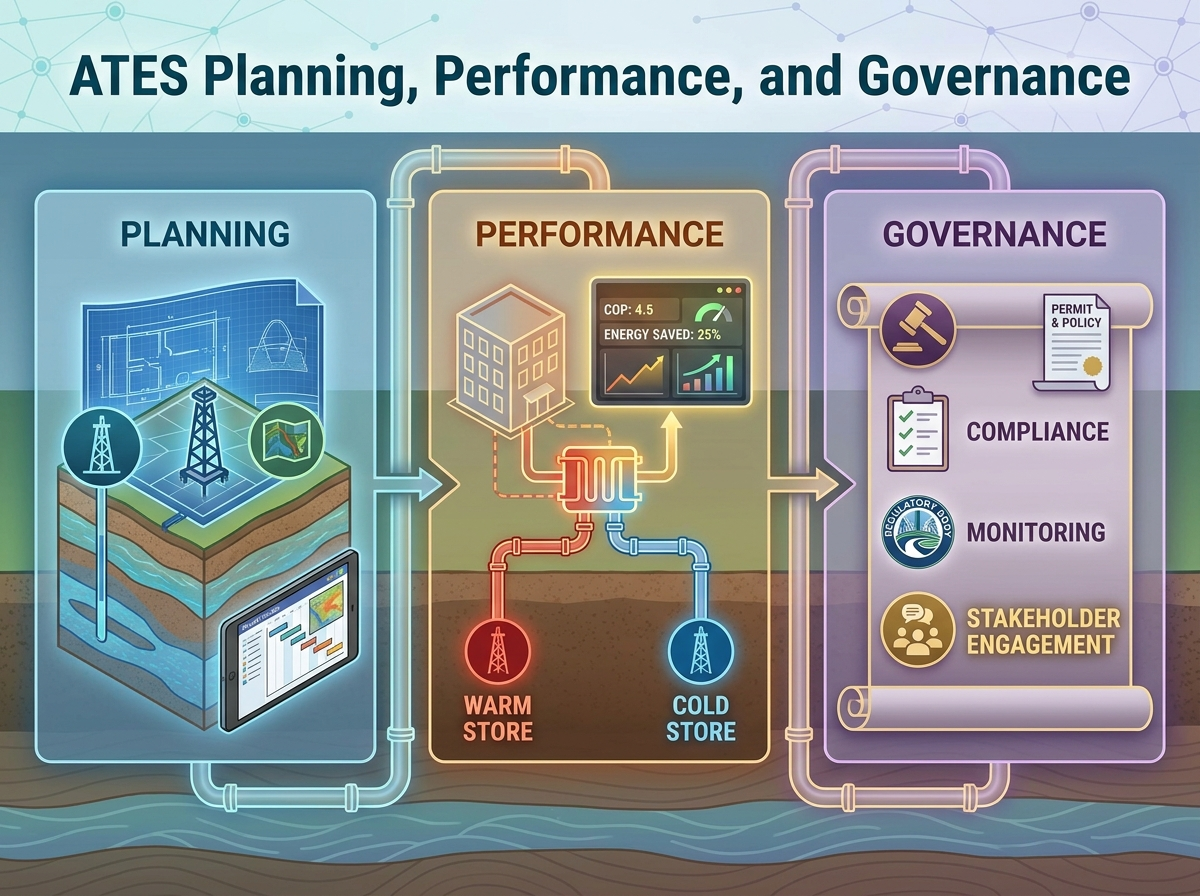
This section focuses on the practical steps needed to plan an ATES system that performs reliably in real sites. You’ll learn how subsurface conditions, thermal–hydraulic behavior, and operational choices shape outcomes in the ATES sector. It also introduces the monitoring and governance basics that determine whether a project can be permitted, coordinated, and sustained over time.
Learning Objectives
-
Identify basic site suitability factors for ATES, including key aquifer and boundary conditions.
-
Explain how thermal and hydraulic interactions influence well spacing, plume behavior, and seasonal balance.
-
Select core monitoring measurements and recognize common failure modes and their typical symptoms.
-