

Section outline
-
Introduction
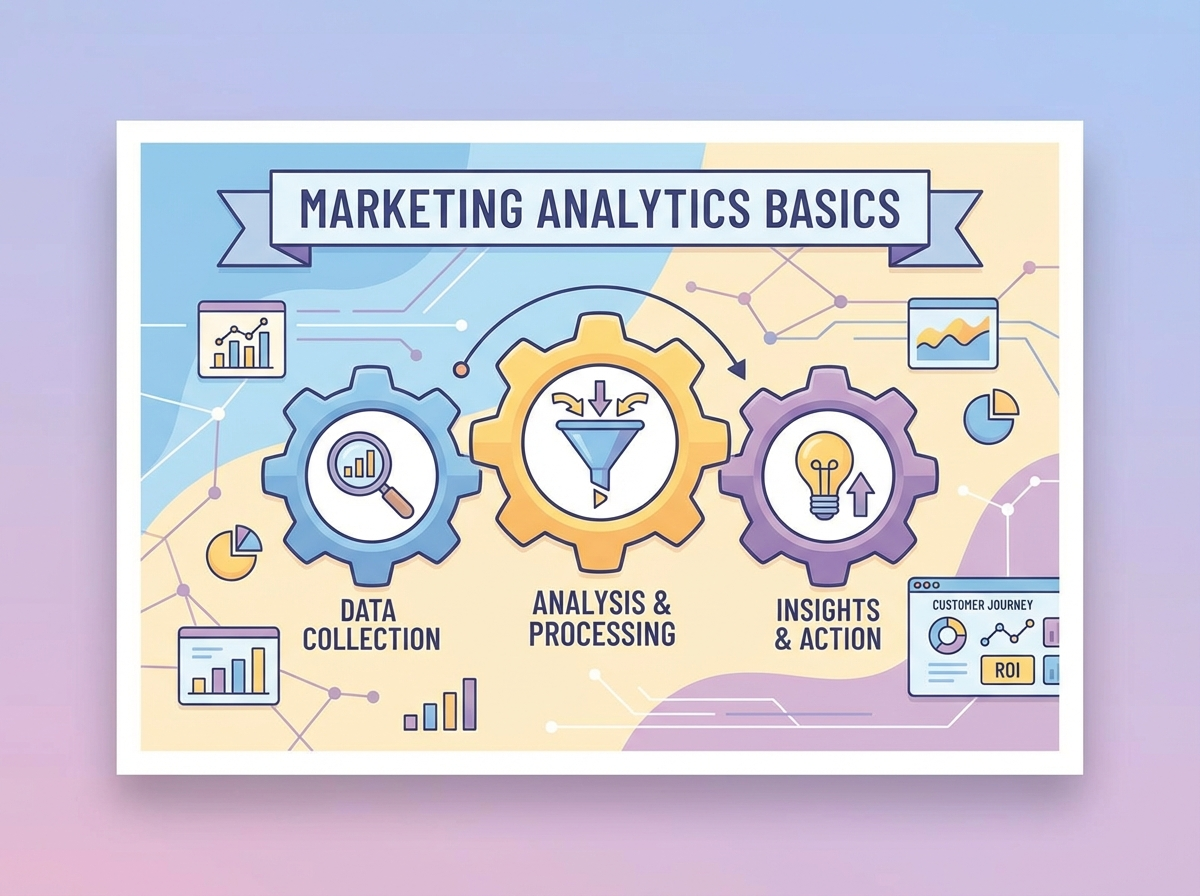
Marketing analytics helps online marketers turn campaign data into better decisions about targeting, content, and spend. In this section, you’ll learn the basic concepts and metric types that make performance reporting meaningful. You’ll also identify common misconceptions that lead beginners to track the wrong numbers or draw the wrong conclusions.
Learning Objectives
-
Define marketing analytics and explain how it supports online marketing decisions.
-
Identify core concepts (audiences, funnels, channels, outcomes) and relate them to real campaigns.
-
Categorize key metric types (volume, engagement, conversion, value) and recognize common beginner pitfalls.
-
-
Introduction
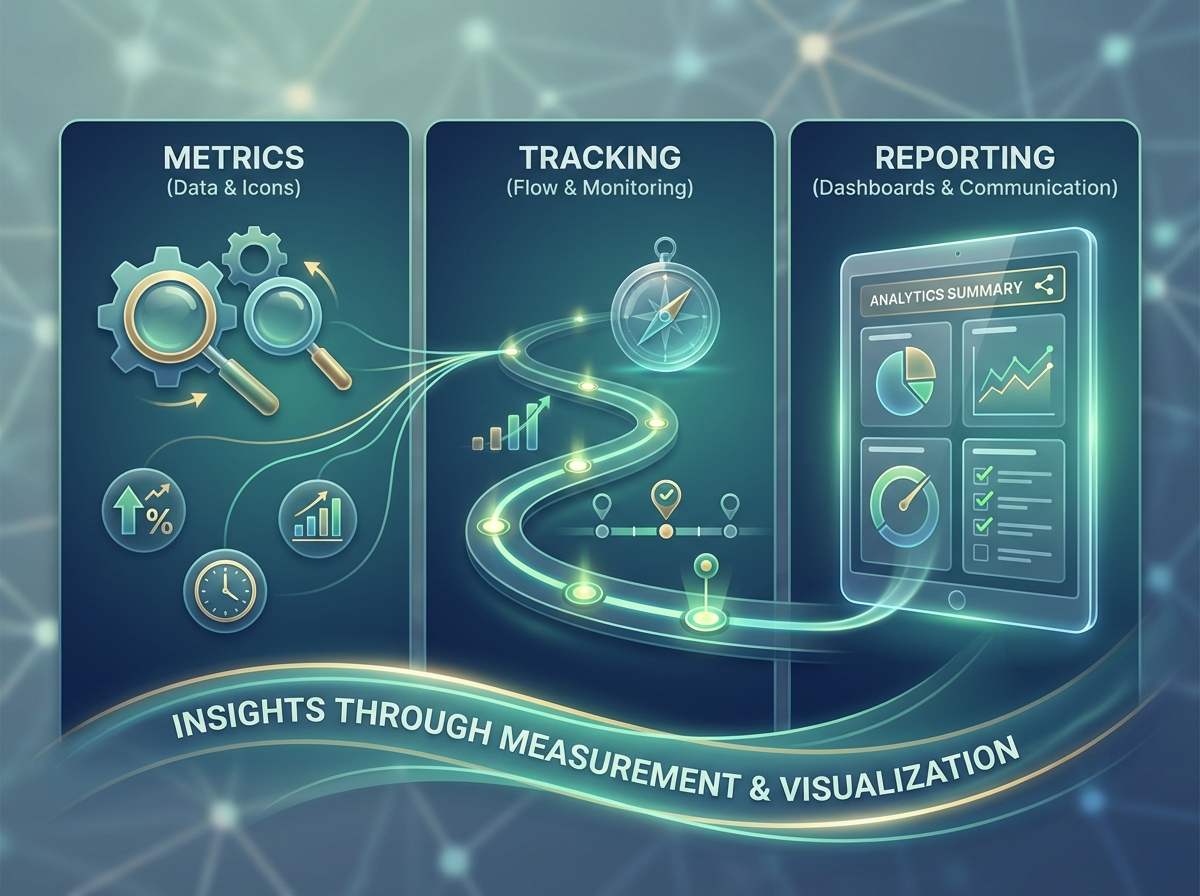
This section shows how to choose the right KPIs, set up foundational tracking, and turn data into reporting that supports marketing decisions. In online marketing, small tagging or attribution mistakes can quickly lead to misleading conclusions and wasted spend. You’ll learn practical basics to collect cleaner data and tell clearer performance stories.
Learning Objectives
-
Select KPIs that align to a marketing goal and a specific funnel stage.
-
Explain attribution basics (last-click vs multi-touch) and when each is useful.
-
Identify core tracking and reporting elements (UTMs, events, pixels, consent, and data quality checks).
-
-

Introduction
This section consolidates the key ideas from marketing analytics basics and measurement so you can apply them confidently in online marketing work. You’ll connect concepts like funnels, KPIs, attribution, and tracking into a practical mental model for making better decisions. The goal is to leave with clear next steps for improving measurement and analysis in real campaigns.
Learning Objectives
-
Summarize the core marketing analytics concepts and how they support online marketing decisions.
-
Identify the next best skill or topic to learn based on your current analytics needs and gaps.
-