

Section outline
-
Introduction
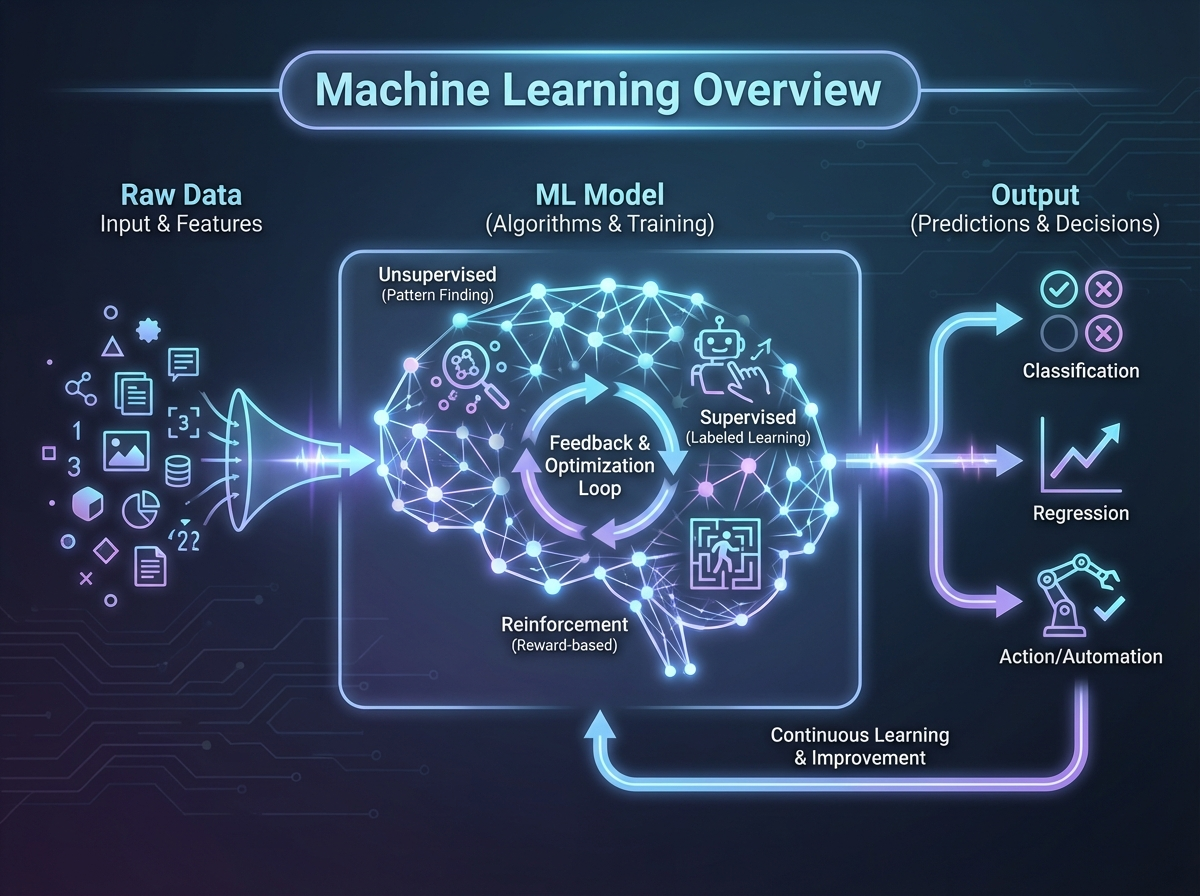
This section introduces what machine learning is and how it fits into day-to-day work in data science. You’ll learn how ML differs from traditional analytics and the kinds of problems ML is designed to solve. By understanding common task types and the typical workflow and roles, you’ll be better prepared to collaborate on ML projects and identify where ML adds business value.
Learning Objectives
-
Distinguish machine learning from traditional analytics in a data science context.
-
Identify common ML task types (prediction, classification, clustering) and when to use each.
-
Describe a typical ML workflow, key team roles, and where ML creates value (automation, personalization, risk).
-
-

Introduction
This section builds the essential vocabulary you’ll use to understand and communicate about machine learning work in a data science setting. You’ll learn how datasets are represented for modeling, what it means to “train” a model, and why performance can change outside the lab. These concepts form the foundation for reading ML documentation, collaborating with teams, and validating results responsibly.
Learning Objectives
-
Identify features, targets/labels, and training examples in a supervised ML dataset.
-
Distinguish models, parameters, and hyperparameters, and describe what happens during training.
-
Explain generalization, basic evaluation metrics, and why validation matters before production use.
-
-
Introduction
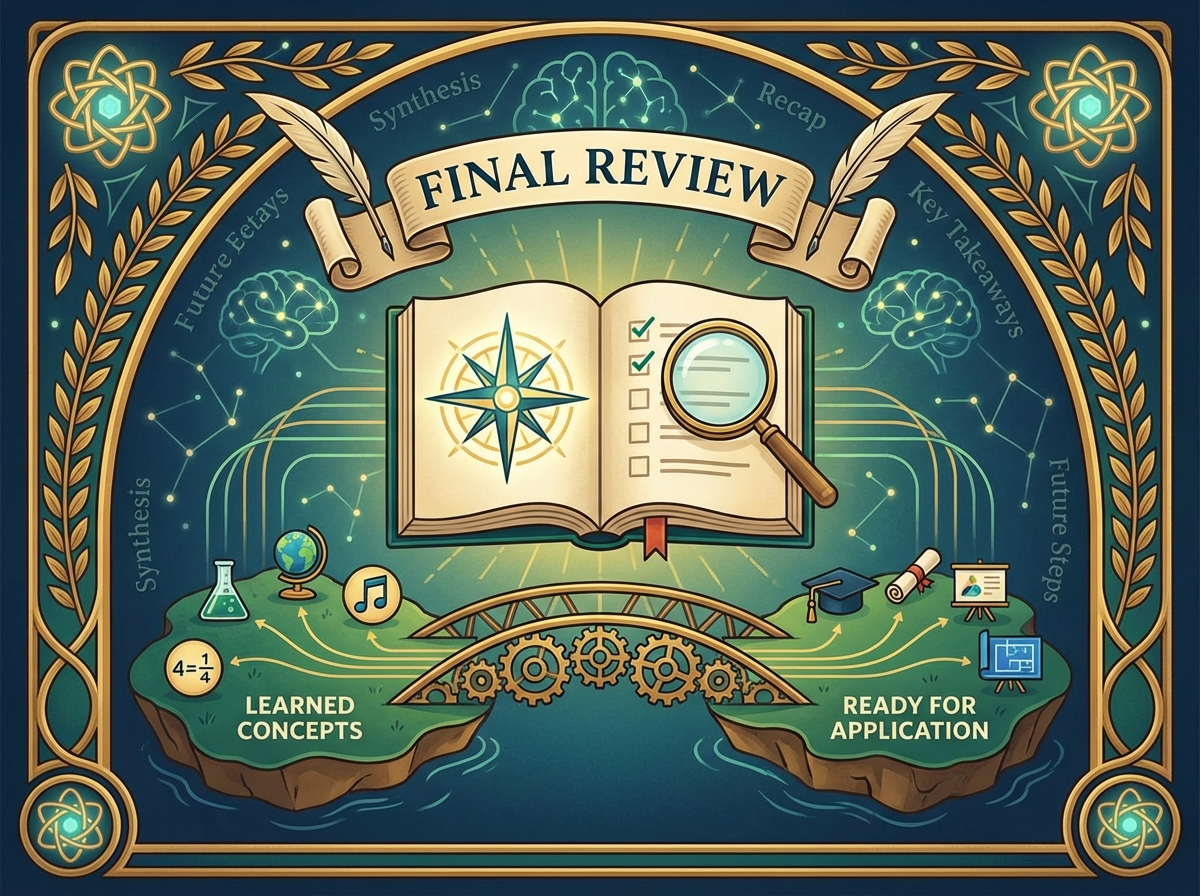
This section consolidates the core machine learning ideas you’ve learned into a coherent big picture, helping you connect terms, task types, and workflow steps. In data science contexts, clear recall and correct application of fundamentals are essential for communicating with stakeholders and avoiding common pitfalls. You’ll also map next steps so you can continue building skills with purpose.
Learning Objectives
-
Summarize the key machine learning concepts from Sections 1–2 in your own words.
-
Identify the right ML task type and evaluation approach for a simple business problem.
-
Outline a practical next-step learning plan for continued ML growth in data science.
-